
Enhance Europe is a European research project exploring how city streets can become sources of clean, reusable energy. The CRM contributes to the project through its Knowledge Transfer Unit (KTU), working alongside 13 institutions from 9 countries, including universities, research centres, technology firms, and public authorities.
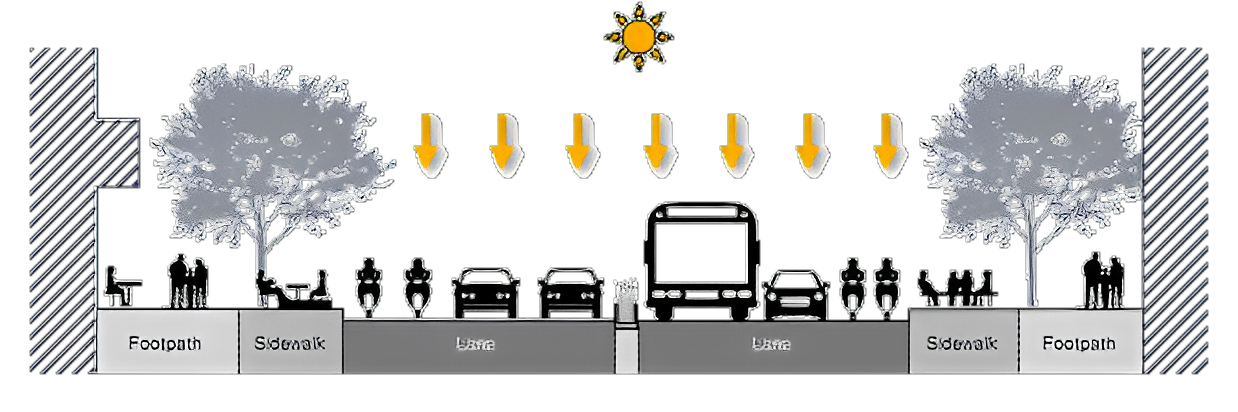
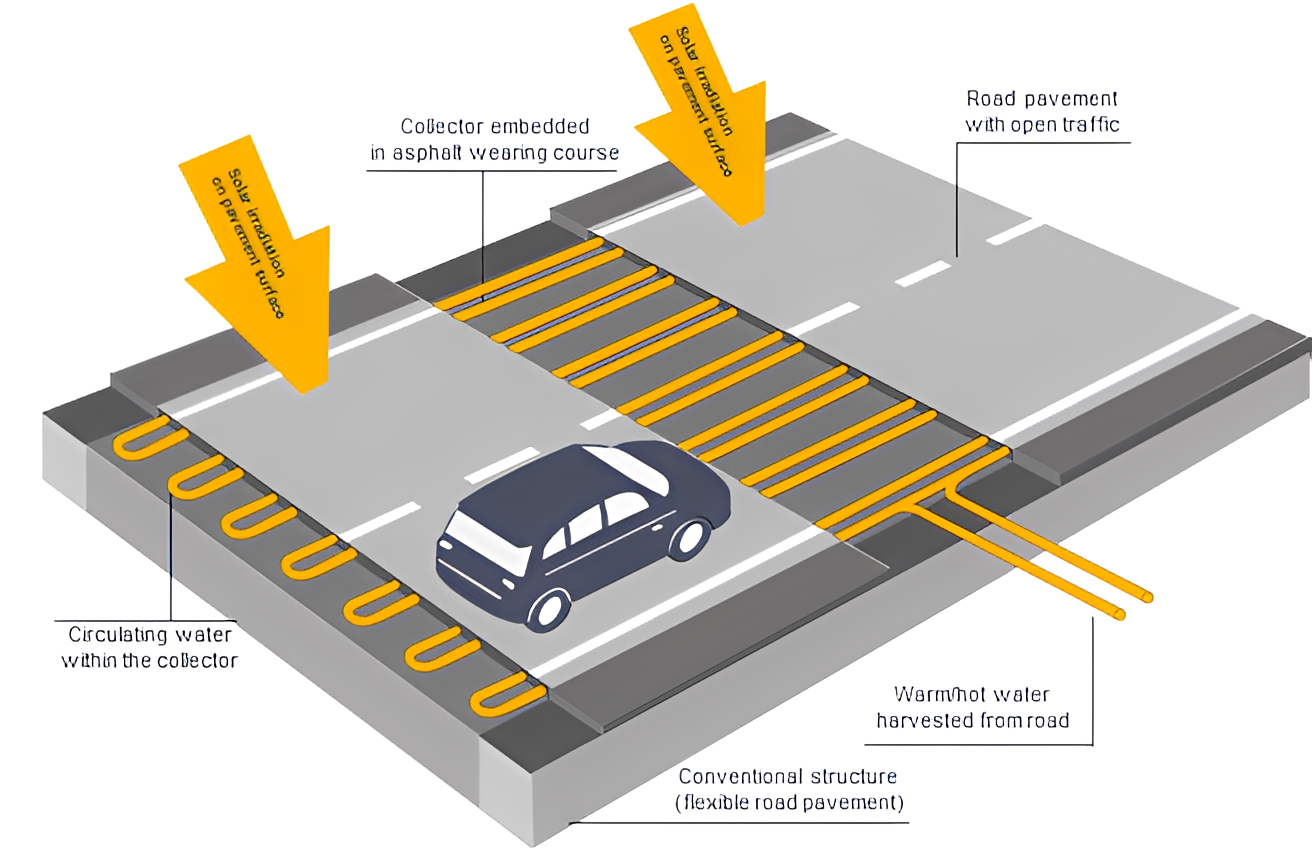
The core idea behind Enhance Europe is to use the sun’s energy (more precisely, the heat absorbed by road surfaces) and transform it into a usable thermal resource. This is done by embedding heat-exchange pipes within the asphalt. These pipes transfer the collected energy to a fluid, which can then serve local thermal needs such as hot water or heating for nearby buildings. In parallel, the system contributes to cooling the road surface, helping mitigate the urban heat island effect.
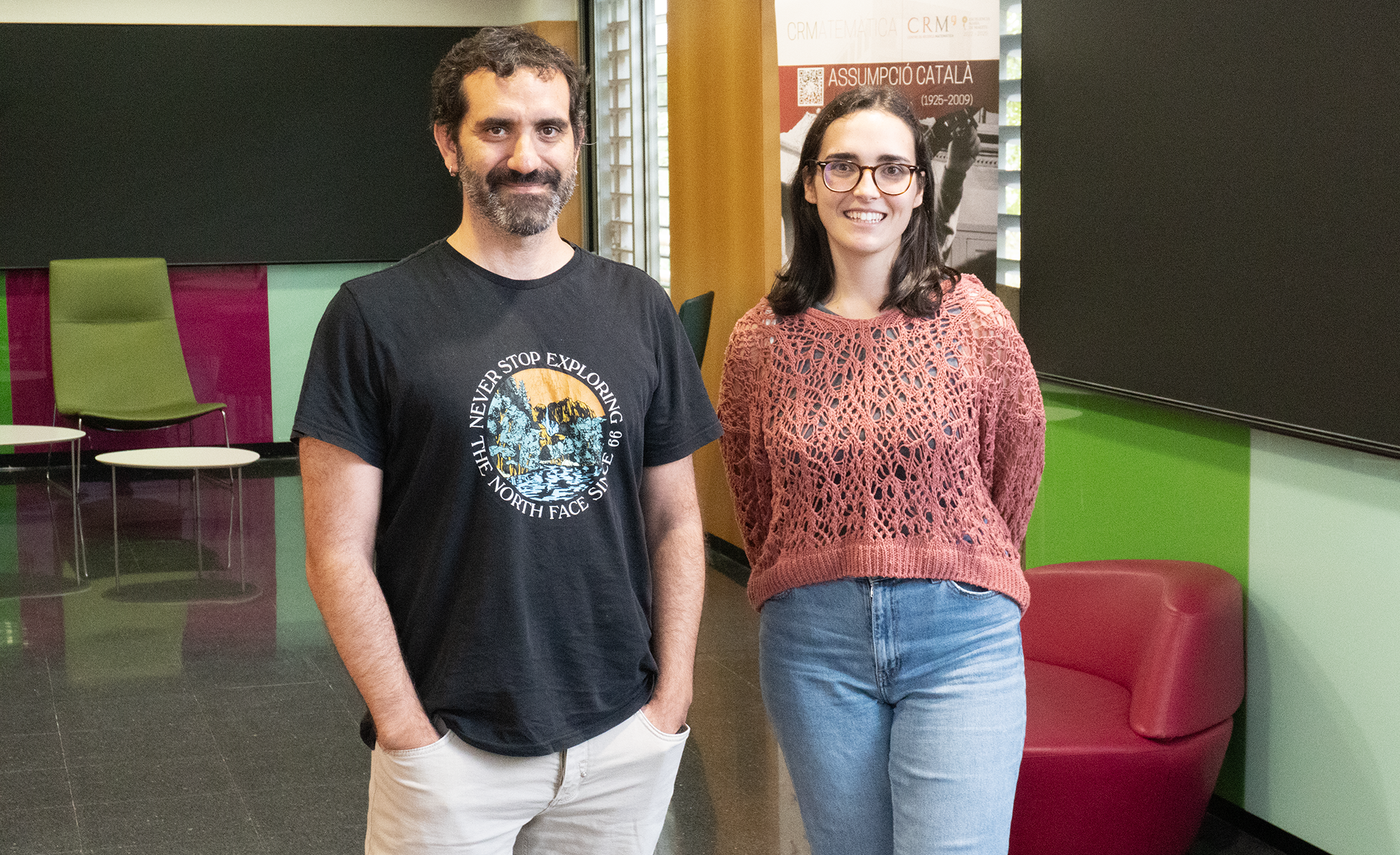
“Within the Enhance Europe project, the CRM is responsible for the mathematical modeling and numerical simulation of the system,” explains David Romero, director of the KTU. “CRM develops and applies advanced numerical methods to solve the partial differential equations (PDEs) that govern heat transfer and fluid dynamics in the pavement-integrated energy harvesting systems. This work is essential for predicting system behaviour, optimising performance, and supporting the design of effective, scalable solutions.”
As Lucia Escudero, research technician at the CRM KTU, describes: “The CRM’s central role is mathematical modeling, integrating all the technical aspects of the project, such as modeling the pipes or using mathematical models to simulate the mechanisms of heat transfer. We also focus on efficiency and sensitivity analysis, providing insight into how the system performs under different conditions.”
This work supports decisions about how the system should be built and operated in diverse urban settings. From geometry and materials to temperature variations and fluid dynamics, CRM’s models offer a way to anticipate what will happen in the real world, before a single meter of pipe is laid.
“CRM develops and applies advanced numerical methods to solve the partial differential equations (PDEs) that govern heat transfer and fluid dynamics in the pavement-integrated energy harvesting systems.”
— David Romero, CRM KTU
“From a mathematical perspective,” adds Romero, “it is especially compelling to see how ideas from abstract mathematics (such as partial differential equations and computational methods) can evolve from the world of theory into a concrete, impactful application. It’s a powerful demonstration of how fundamental science can actively shape real-world solutions and contribute to building a more sustainable future.”
Enhance Europe is coordinated by the University of Padua. The project runs from 2025 to 2028 and is funded by the European CETPartnership programme. Over the next three years, full-scale demonstrators will be built and tested in four cities: Padua (Italy), Ostrava (Czech Republic), Riga (Latvia), and Vaasa (Finland). Each location offers a different climate and urban infrastructure, helping researchers validate the system under varying conditions.
Sharing Knowledge and Rethinking Urban Potential
As part of its involvement, CRM also leads the project’s communication work package. “CRM coordinates efforts to disseminate the project’s progress and results, raise awareness among stakeholders, and promote the broader adoption of this innovative technology,” says Romero.
Finally, Lucia Escudero emphasizes that mathematics plays a deeper role than might be expected in a project focused on infrastructure and environment: “The mathematical approach provides the technical foundation to improve and predict system behavior. We use mathematical models to understand the system, and we apply optimization and analysis techniques to identify the optimal parameters and improve decision-making.”
In the end, Enhance Europe is about reimagining what cities can be, and how even the most mundane surfaces, like asphalt, might contribute to the clean energy transition.
You can learn more about the project visiting https://enhanceeurope.eu/
crm researchers
Subscribe for more CRM News
|
|
CRM CommPau Varela
|
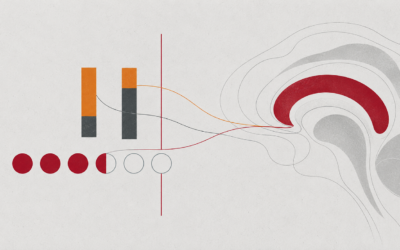
When the reward comes within reach, the brain changes what it compares
As the tokens piled up, choices got faster and more accurate at the same time. The yardstick for judging each offer had moved.CRM CommPau VarelaCRMComm@crm.catGet the latest CRM news and activities in your inbox.Recent newsletters →Two subjects...

Almost every automaton can be reset with a short word
Guillaume Chapuy (Université Paris Cité, CNRS) and Guillem Perarnau (UPC, CRM) have shown that a random finite automaton with n states can, with high probability, be reset by a word of length of order √n log n. The result, published in ACM Transactions on Algorithms, pins the exponent at 1/2, the lower end of a decade of numerical estimates, and addresses the random version of the synchronization problem behind a conjecture Ján Černý posed in 1964 and which still remains open.
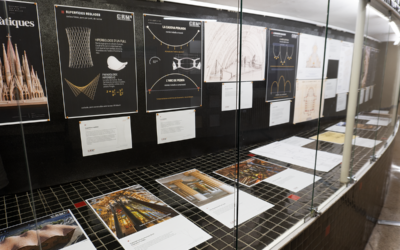
Exposició ‘Les matemàtiques de Gaudí’
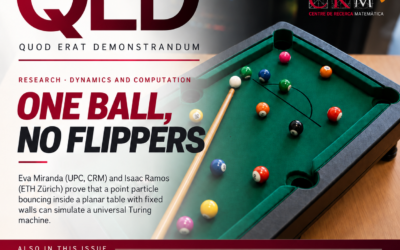
CRM quod erat demonstrandum | 48

ADA: Decoding Brain Signals Misaligned in Time
The study addresses a key limitation of current brain decoding techniques: the difficulty of interpreting internal mental processes whose temporal dynamics vary from trial to trial.Decoding what is happening in a person’s mind from their brain activity is one of the...
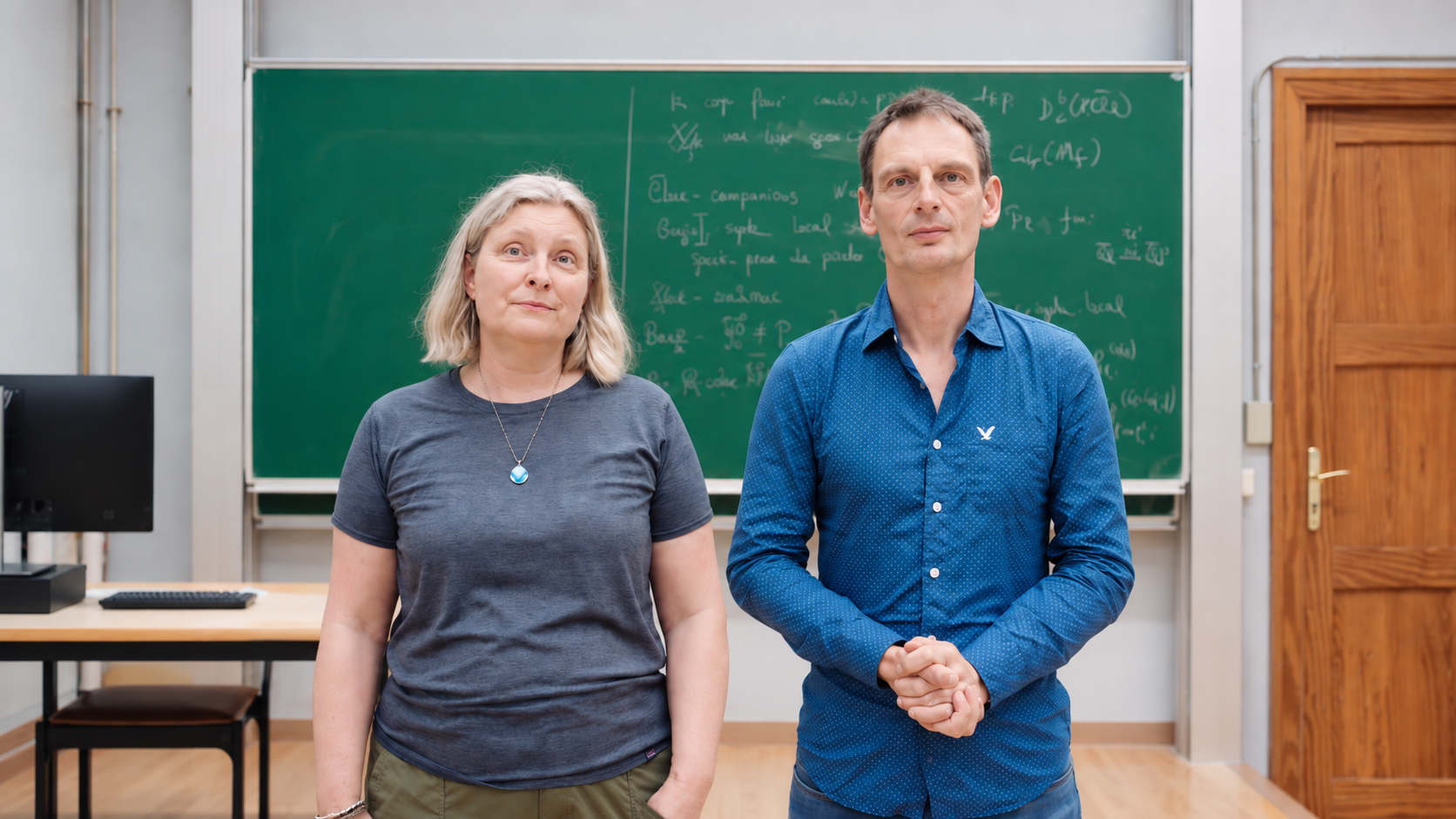
Rare curves, many points: Christophe Ritzenthaler and Rachel Pries on their research and the work around it
Christophe Ritzenthaler (Université de Rennes) and Rachel Pries (Colorado State University) both work on curves over finite fields: he hunts curves with as many points as possible, she hunts curves that almost never occur. In conversation with the CRM during their...
Call open for the 2027 Ferran Sunyer i Balaguer Prize
The Ferran Sunyer i Balaguer Foundation is accepting submissions for its 2027 prize, which awards 15,000 euros and publication in Birkhäuser's Progress in Mathematics series to an expository monograph on an active area of mathematical research. The deadline is 27...
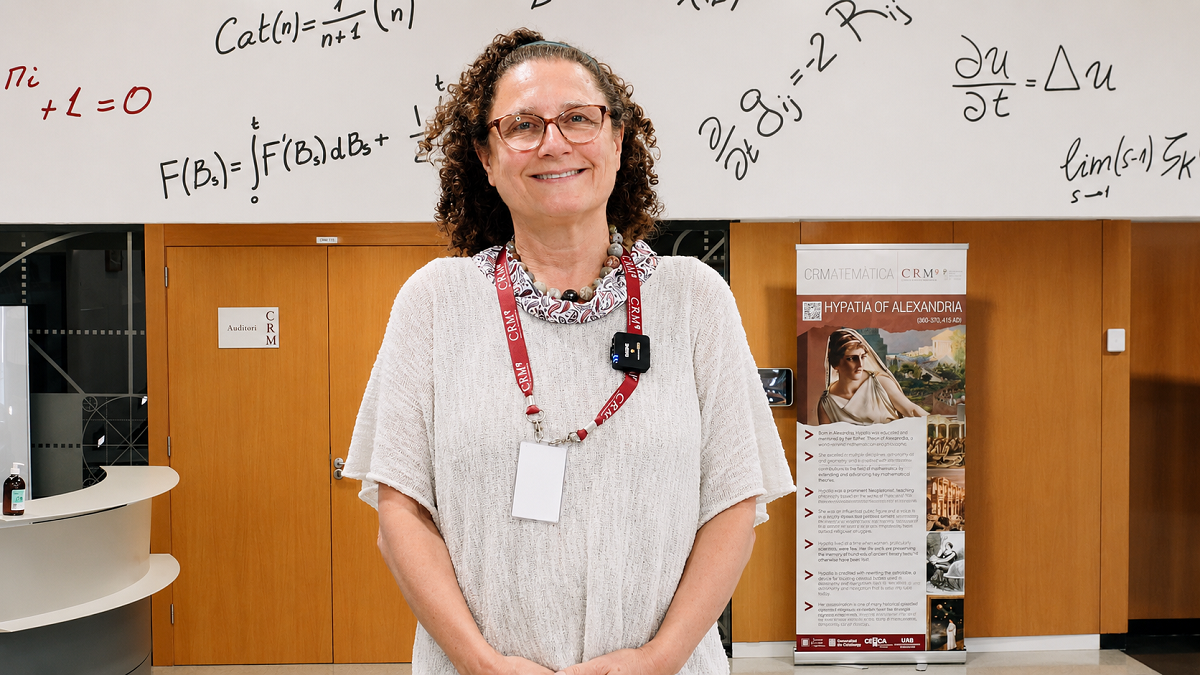
Susanna Terracini delivers the CRM Colloquium 2026
Susanna Terracini (Università di Torino) delivered the CRM Colloquium 2026 on 14 July, presenting a rigidity result for Kepler billiards obtained with Stefano Baranzini, Vivina Barutello and Irene De Blasi. She was at the centre as a member of the CRM Scientific...
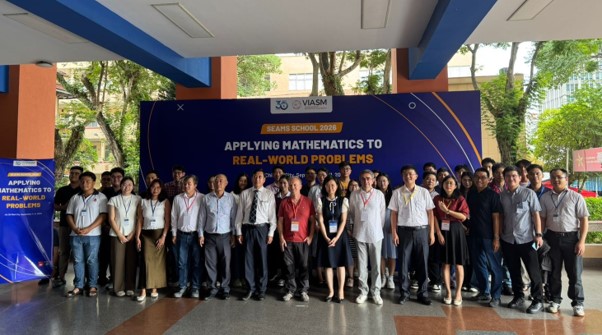
Ho Chi Minh City hosts the SEAMS School on applying mathematics to real-world problems
Students from across the region took courses and worked on group projects at a school co-organised by CRM researcher Tim Myers.CRM CommPau VarelaCRMComm@crm.catGet the latest CRM news and activities in your inbox.Recent newsletters →Between 4 and...

A single ball on a fixed table can compute: Eva Miranda and Isaac Ramos prove that two-dimensional billiards are Turing complete
Eva Miranda (UPC, CRM) and Isaac Ramos (ETH Zürich) show that a point particle bouncing inside a planar table with fixed walls can simulate a universal Turing machine, settling a question Cristopher Moore left open in 1990. The result grew out of a master’s project...
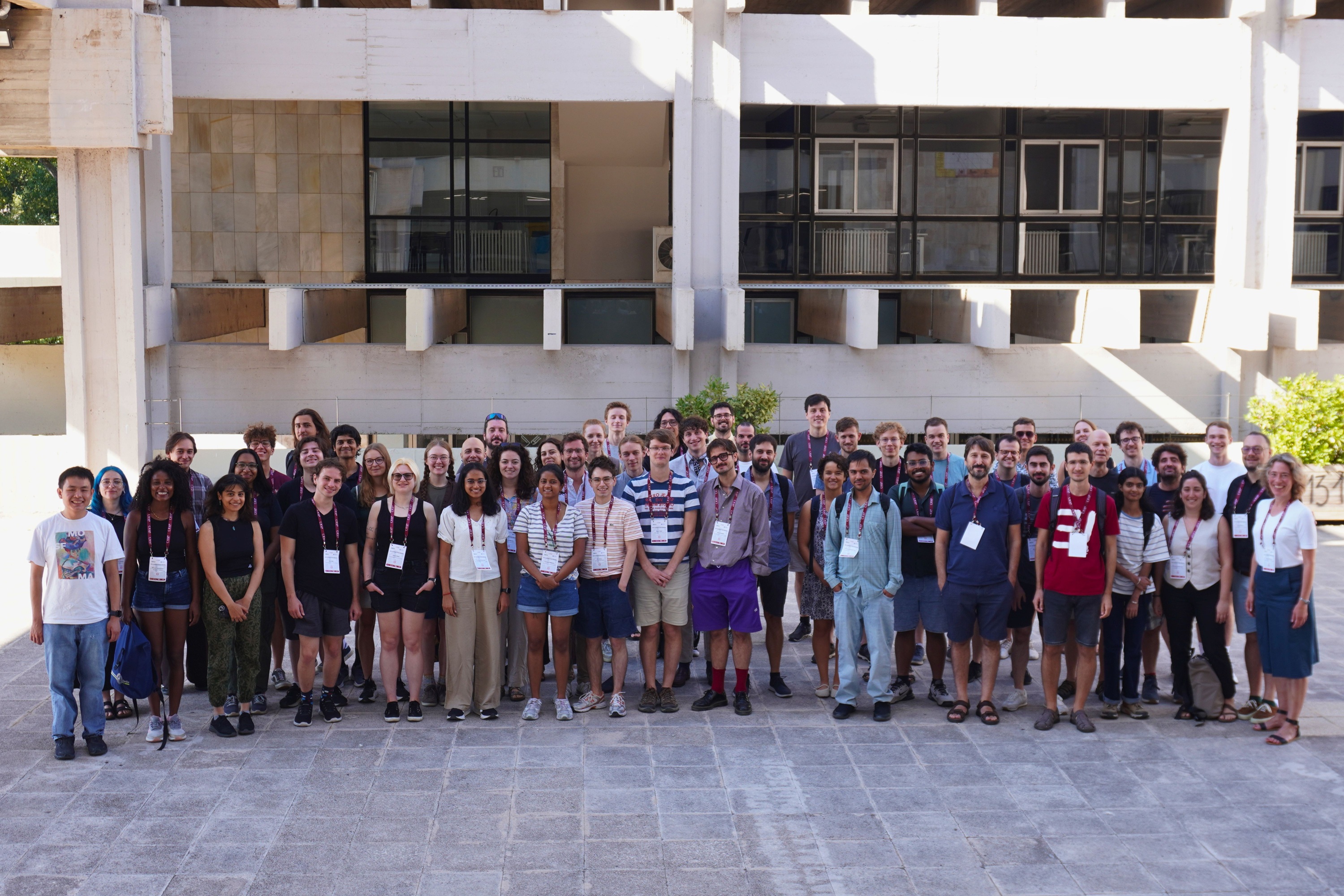
BMS-BGSMath Junior Meeting 2026: Barcelona and Berlin Strengthen Scientific Ties
From 2 to 4 September 2026, the Centre de Recerca Matemàtica (CRM) hosted the BMS-BGSMath Junior Meeting 2026, a three-day event jointly organised by the Berlin Mathematical School (BMS) and the Barcelona Graduate School of Mathematics (BGSMath), with the Centre de...
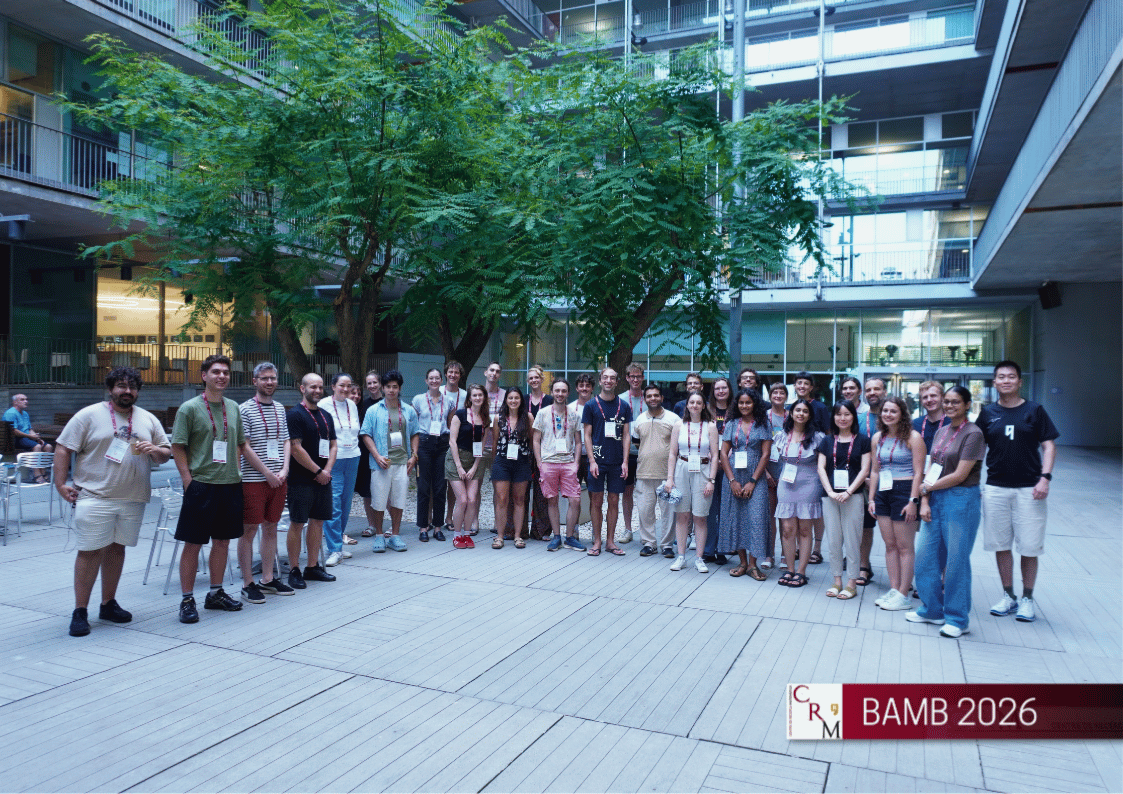
The CRM organises the 2026 Barcelona Summer School for Advanced Modeling of Behavior
The Centre de Recerca Matemàtica held the sixth edition of BAMB!, the Barcelona Summer School for Advanced Modeling of Behavior, from 12 to 23 July 2026 at the Parc de Recerca Biomèdica de Barcelona. Thirty early-career researchers from fourteen countries followed...