
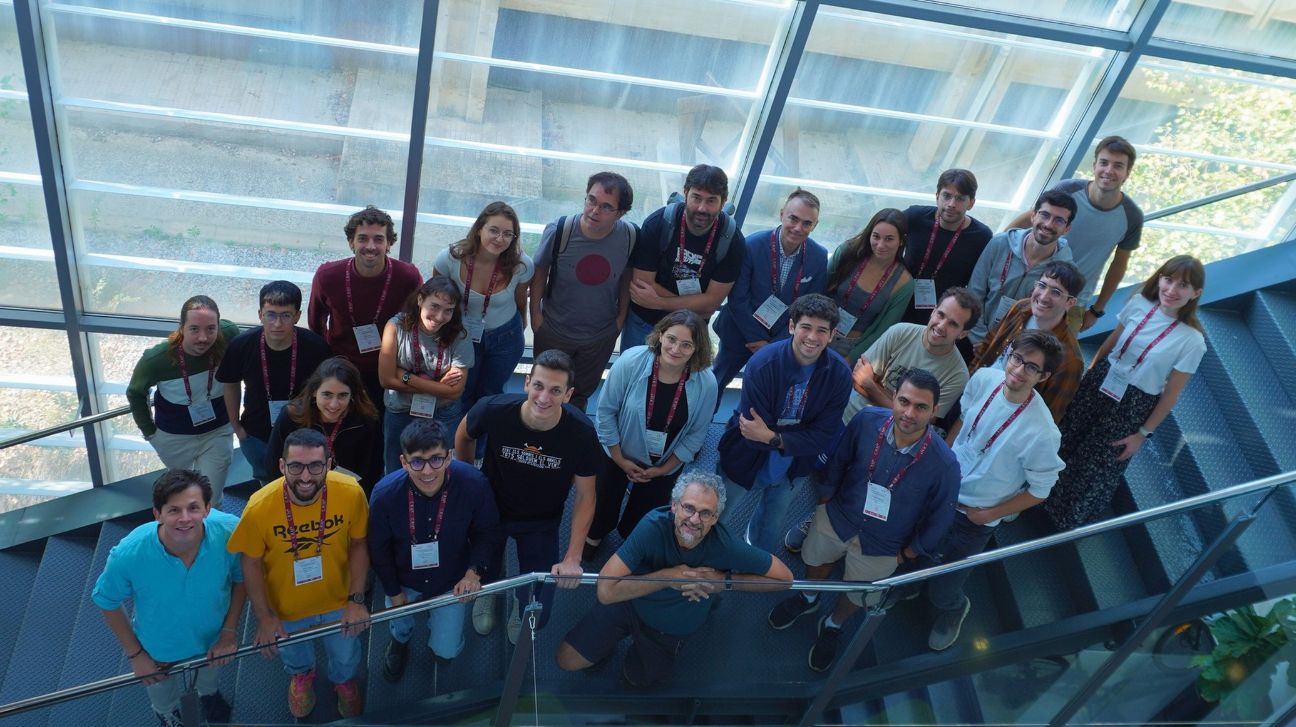
If there’s such a thing as a natural habitat for complexity, it’s definitely a room full of scientists arguing about it. From September 29 to October 3, 2025, the auditorium of the Centre de Recerca Matemàtica (CRM) became exactly that for the first Summer School of the Complex Systems Society (CS3): a living laboratory of ideas, all trying to decode how the world organises itself into chaos, and chaos into order.
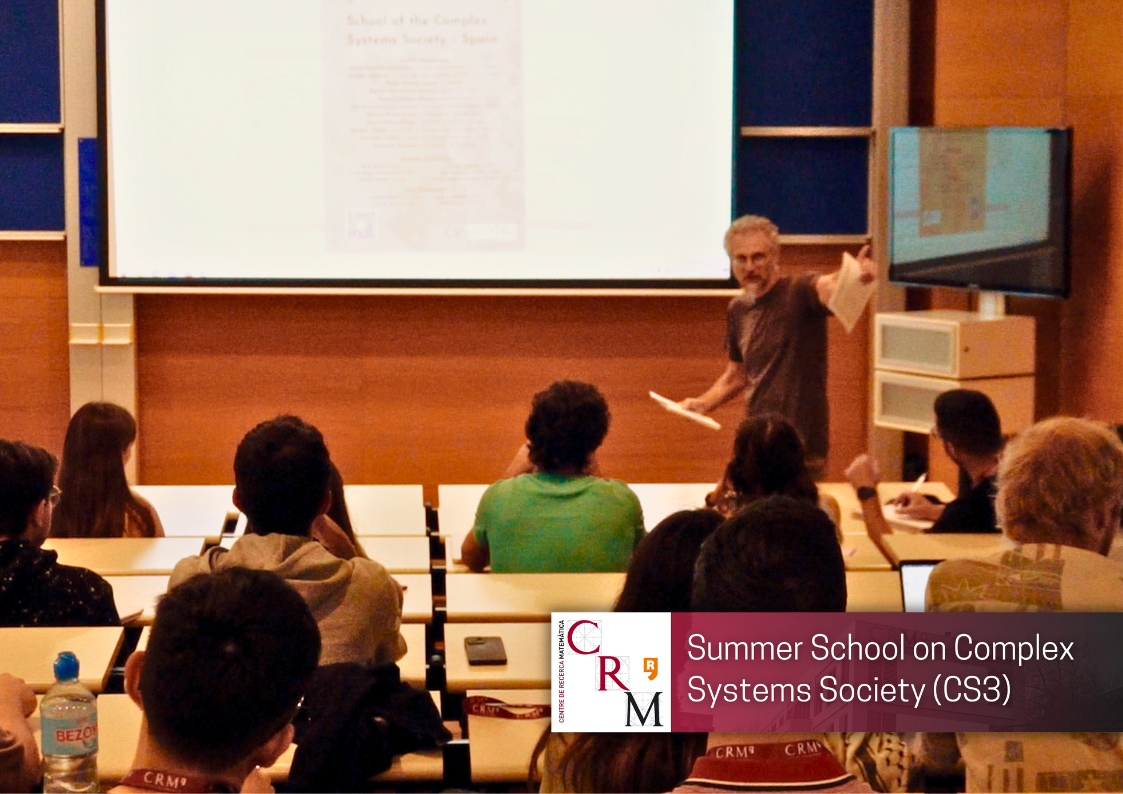
This was the inaugural edition of what is set to become a biennial tradition of the Complex Systems Society Spain (CS³), the Spanish Chapter of the Complex Systems Society, founded to connect and strengthen the country’s growing community of researchers in complex systems. CS³ promotes collaboration across disciplines, from physics and biology to economics and the social sciences, through meetings, workshops, and schools that bridge theory and application. For five days, the CRM transformed into a miniature ecosystem of its own with biologists, physicists, economists, and mathematicians orbiting a shared set of questions: How do systems grow, adapt, and eventually break down?
For five days, the CRM became a miniature ecosystem of its own; biologists, physicists, economists, and mathematicians orbiting a shared set of questions: How do systems grow, adapt, and eventually break down?
Invited lecturers included Bernat Corominas-Murtra (Graz University), who led a journey through embryonic development, a dance of feedback, mechanics, and stochastic magic that somehow yields a creature instead of chaos, and Gasper Tkačik (ISTA), who shifted the conversation to optimisation; the idea that genes, neurons, and ecosystems might all be nature’s way of solving problems with mathematical precision.
Antonio Turiel (CSIC) brought the tone down to the planetary scale and to Earth’s thermodynamic limits. His course on energy, entropy, and collapse was a sober reminder that no system, not even the global economy, escapes the second law. And finally, Karoline Wiesner (University of Potsdam) closed the circle, tracing the philosophical and computational foundations of complexity science; from randomness to emergence, from theory to the social sphere.
Afternoons brought a different rhythm: contributed talks and posters that spilt from the lecture hall into corridors and coffee lines. Among the invited talks, Guim Aguadé-Gorgorió compared tumours to ecosystems, David Moriña revealed the hidden mathematics of gender-based violence, and Jacobo Aguirre stretched the discussion to the stars, tracing how molecular complexity might arise in interstellar clouds. Even the pharmaceutical world joined in, with Núria Folguera-Blasco (AstraZeneca) showing how mathematical models guide drug development. Marta Sales-Pardo (URV) closed the loop, reminding everyone that even in science, our assumptions are often the most invisible variables.
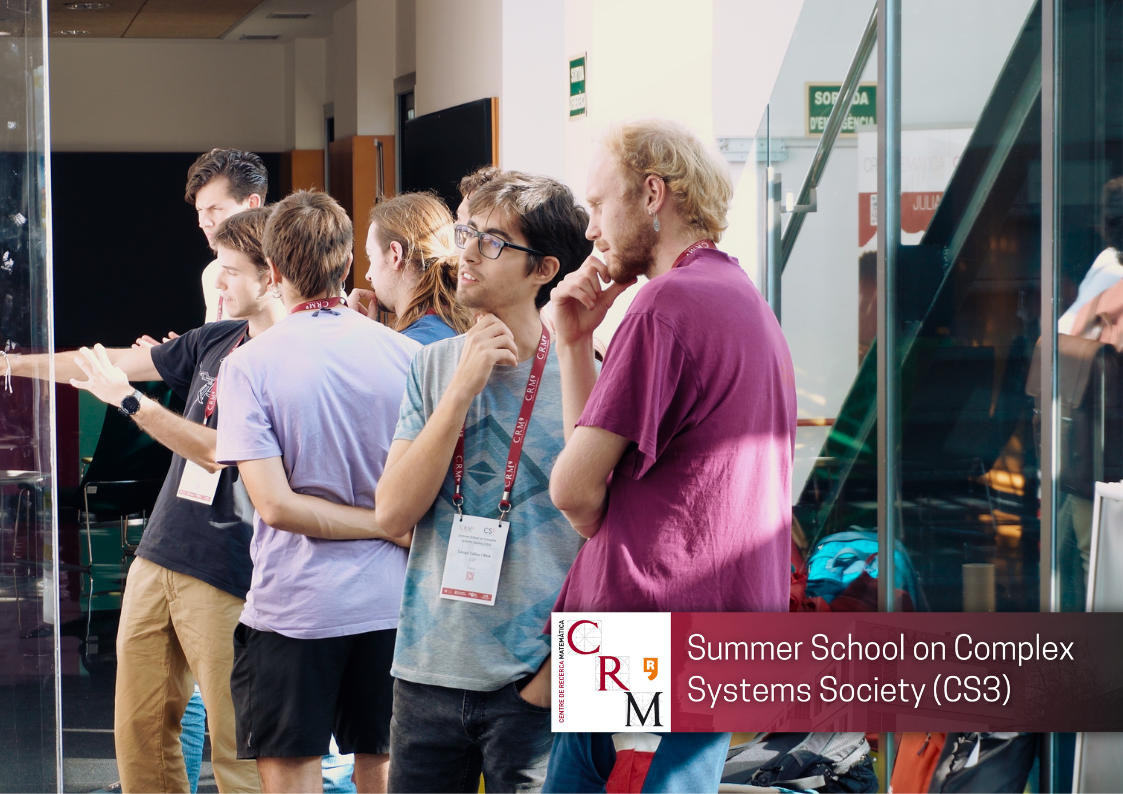
All in all, forty-seven participants from more than ten countries and over thirty institutions took part in the school; ten invited speakers, dozens of perspectives, and countless ideas exchanged over the course of five intense days.
Subscribe for more CRM News
|
|
CRM CommPau Varela
|
When the reward comes within reach, the brain changes what it compares
As the tokens piled up, choices got faster and more accurate at the same time. The yardstick for judging each offer had moved.CRM CommPau VarelaCRMComm@crm.catGet the latest CRM news and activities in your inbox.Recent newsletters →Two subjects...
Almost every automaton can be reset with a short word
Guillaume Chapuy (Université Paris Cité, CNRS) and Guillem Perarnau (UPC, CRM) have shown that a random finite automaton with n states can, with high probability, be reset by a word of length of order √n log n. The result, published in ACM Transactions on Algorithms, pins the exponent at 1/2, the lower end of a decade of numerical estimates, and addresses the random version of the synchronization problem behind a conjecture Ján Černý posed in 1964 and which still remains open.
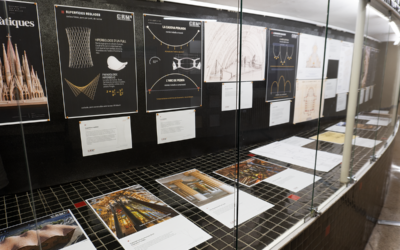
Exposició ‘Les matemàtiques de Gaudí’
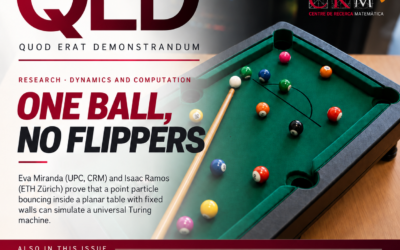
CRM quod erat demonstrandum | 48
ADA: Decoding Brain Signals Misaligned in Time
The study addresses a key limitation of current brain decoding techniques: the difficulty of interpreting internal mental processes whose temporal dynamics vary from trial to trial.Decoding what is happening in a person’s mind from their brain activity is one of the...
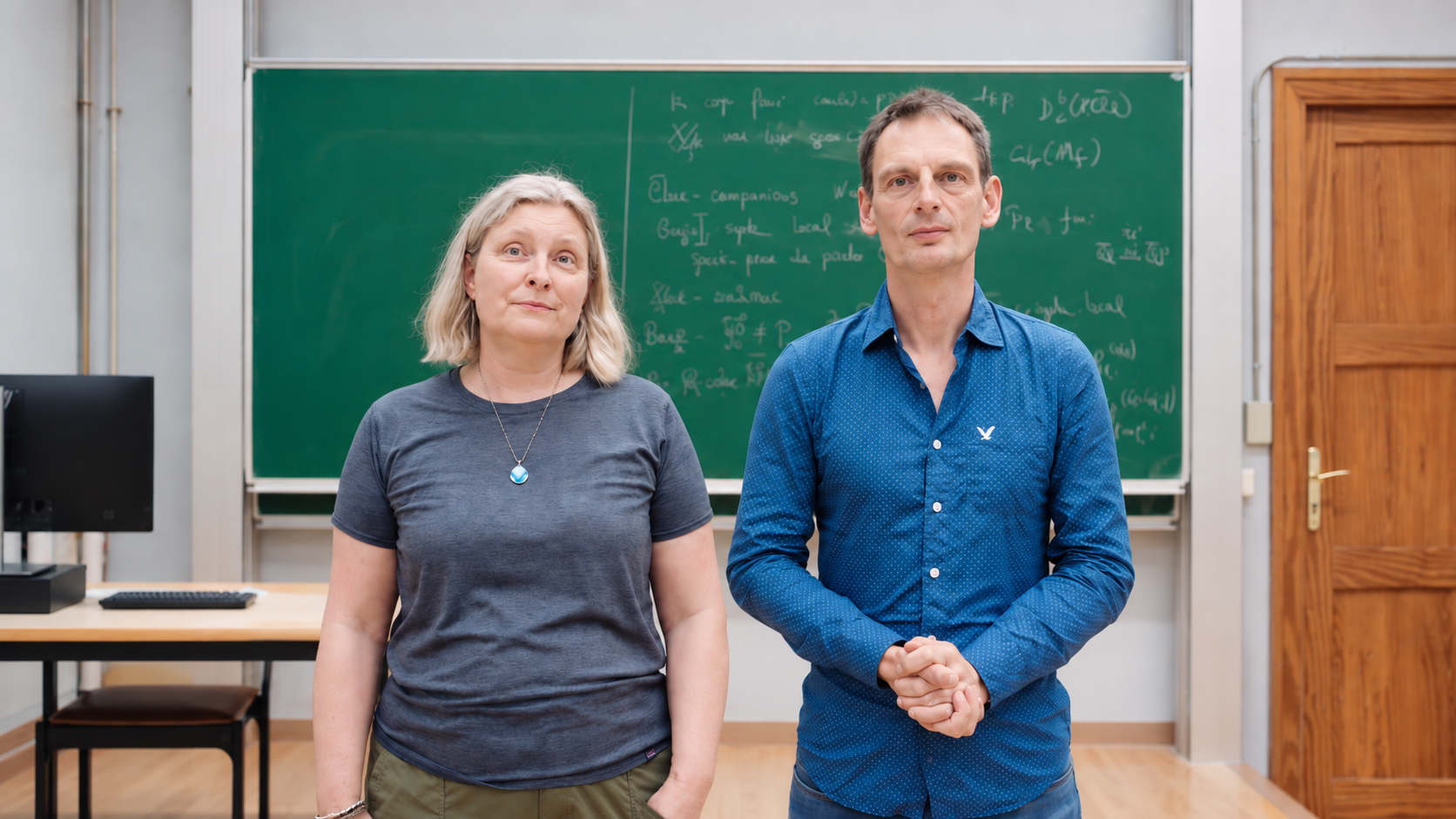
Rare curves, many points: Christophe Ritzenthaler and Rachel Pries on their research and the work around it
Christophe Ritzenthaler (Université de Rennes) and Rachel Pries (Colorado State University) both work on curves over finite fields: he hunts curves with as many points as possible, she hunts curves that almost never occur. In conversation with the CRM during their...

Call open for the 2027 Ferran Sunyer i Balaguer Prize
The Ferran Sunyer i Balaguer Foundation is accepting submissions for its 2027 prize, which awards 15,000 euros and publication in Birkhäuser's Progress in Mathematics series to an expository monograph on an active area of mathematical research. The deadline is 27...
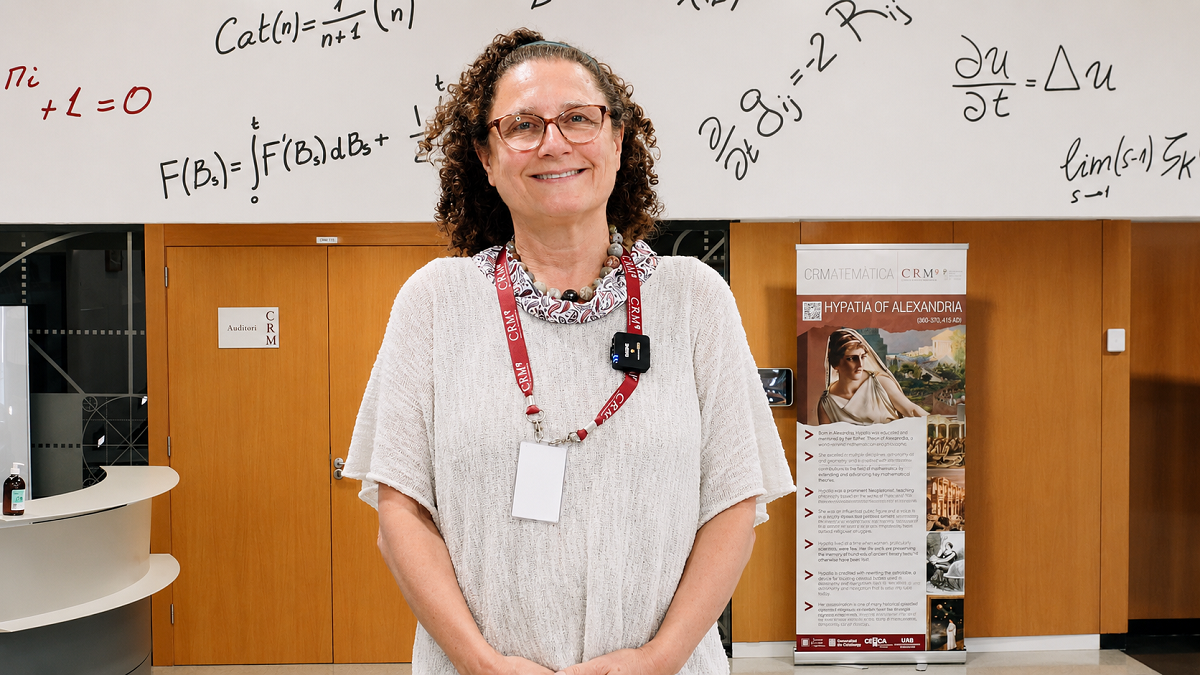
Susanna Terracini delivers the CRM Colloquium 2026
Susanna Terracini (Università di Torino) delivered the CRM Colloquium 2026 on 14 July, presenting a rigidity result for Kepler billiards obtained with Stefano Baranzini, Vivina Barutello and Irene De Blasi. She was at the centre as a member of the CRM Scientific...
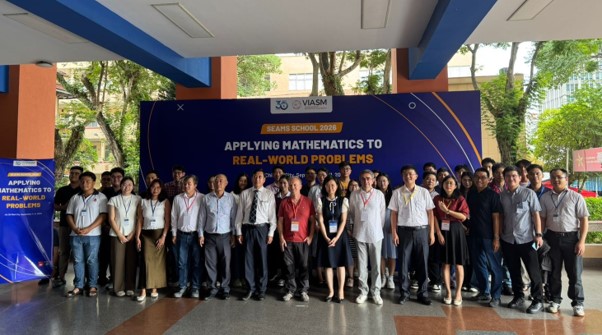
Ho Chi Minh City hosts the SEAMS School on applying mathematics to real-world problems
Students from across the region took courses and worked on group projects at a school co-organised by CRM researcher Tim Myers.CRM CommPau VarelaCRMComm@crm.catGet the latest CRM news and activities in your inbox.Recent newsletters →Between 4 and...

A single ball on a fixed table can compute: Eva Miranda and Isaac Ramos prove that two-dimensional billiards are Turing complete
Eva Miranda (UPC, CRM) and Isaac Ramos (ETH Zürich) show that a point particle bouncing inside a planar table with fixed walls can simulate a universal Turing machine, settling a question Cristopher Moore left open in 1990. The result grew out of a master’s project...
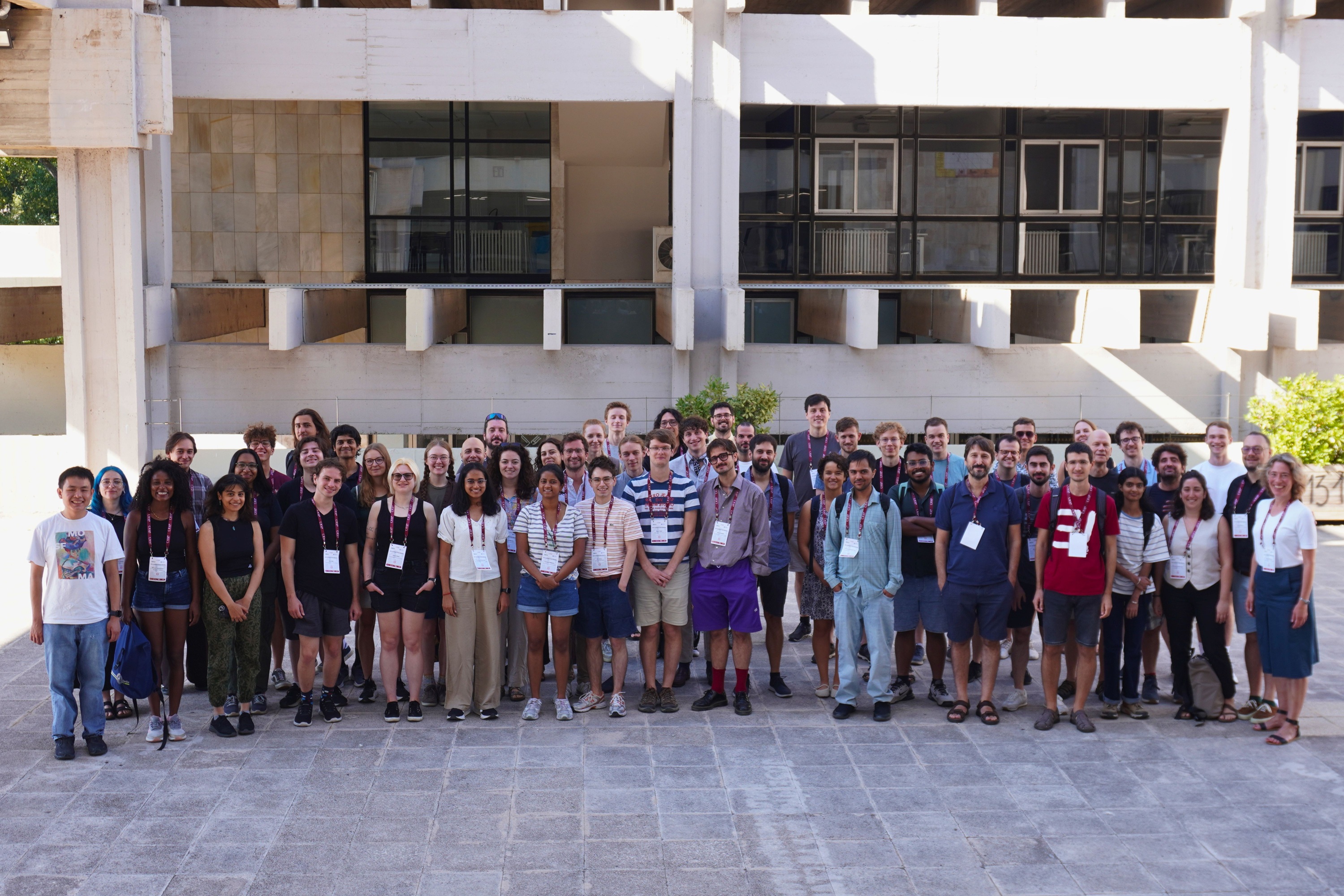
BMS-BGSMath Junior Meeting 2026: Barcelona and Berlin Strengthen Scientific Ties
From 2 to 4 September 2026, the Centre de Recerca Matemàtica (CRM) hosted the BMS-BGSMath Junior Meeting 2026, a three-day event jointly organised by the Berlin Mathematical School (BMS) and the Barcelona Graduate School of Mathematics (BGSMath), with the Centre de...
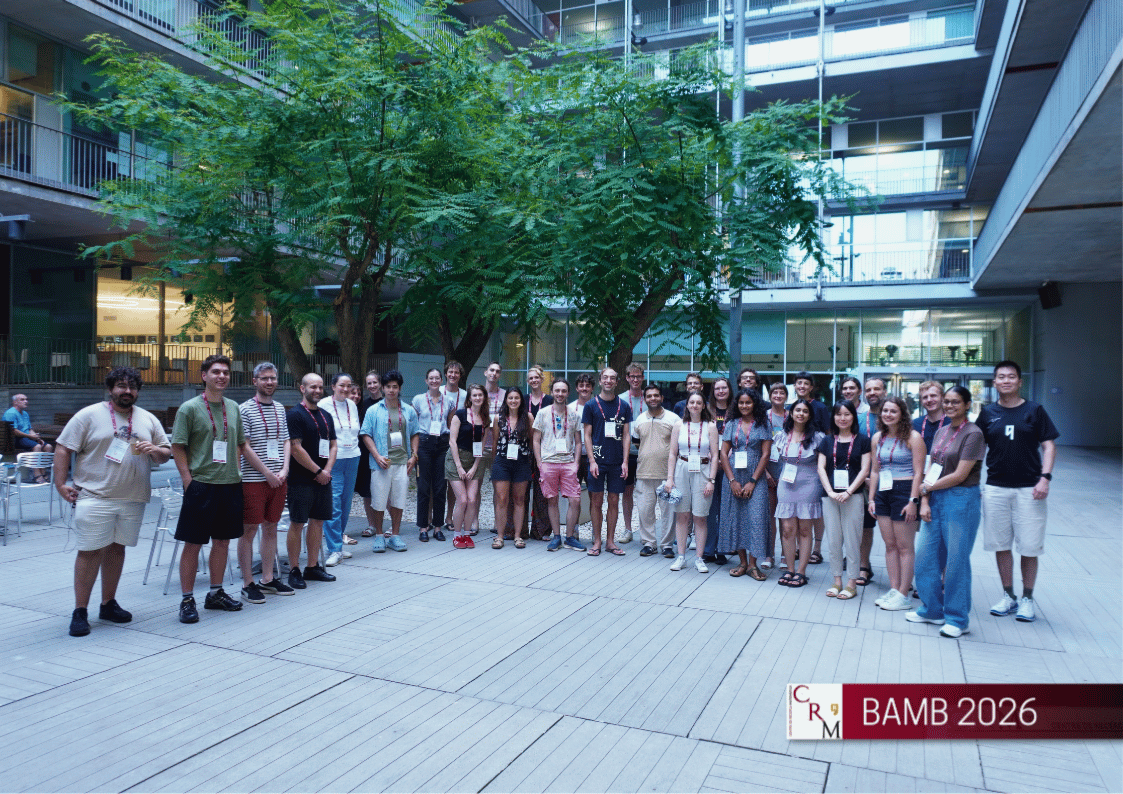
The CRM organises the 2026 Barcelona Summer School for Advanced Modeling of Behavior
The Centre de Recerca Matemàtica held the sixth edition of BAMB!, the Barcelona Summer School for Advanced Modeling of Behavior, from 12 to 23 July 2026 at the Parc de Recerca Biomèdica de Barcelona. Thirty early-career researchers from fourteen countries followed...