

Researchers Tom Koornwinder (U. Amsterdam) and Marta Mazzocco (ICREA-UPC-CRM) published a paper in Indagationes Mathematicae exploring DAHA symmetries. Their work shows that these symmetries shift Askey–Wilson polynomials into a continuous functional setting,and introduce an explicit decomposition of the non‑symmetric Askey–Wilson function into symmetric and anti‑symmetric parts. This work offers new structural insight into how certain DAHA automorphisms act across polynomial and functional settings within the q‑Askey scheme, without altering the established links with representation theory.
 and non‑symmetric Askey–Wilson functions in Indagationes Mathematicae. In this work, the authors analyze the internal symmetries of double affine Hecke algebras (DAHA) and study how these symmetries act on Askey‑Wilson (AW) polynomials and functions, both in the symmetric and non‑symmetric settings.
At first glance, one expects symmetries to move neatly within the world of polynomials. But some symmetries behave like a zoom tool: once applied, the picture demands higher resolution. What looked discrete (polynomials) must be viewed in a continuous setting (functions) for the transformation to make full sense. The paper leverages this change of scale to illuminate where the natural language of DAHA symmetries truly lives.
The work focuses on the relationship between algebraic structures and special functions—fundamental objects in representation theory and mathematical analysis—with deep connections to harmonic analysis and mathematical physics.
A well‑known structure — still with unanswered questions
Double affine Hecke algebras (DAHA), introduced by Cherednik, are central in representation theory and in the study of special functions. In the rank‑one case, the DAHA of type  is closely related to Askey–Wilson polynomials and functions, which occupy the top level of the q‑Askey scheme of orthogonal polynomials.
Previous works had identified actions of various symmetry groups—such as modular groups or Weyl‑type groups—on operators associated with the DAHA and even on the algebra itself. However, a systematic account of how these symmetries act on the relevant eigenfunctions, in particular on Askey–Wilson polynomials and functions, was still missing. In particular, it was unclear whether these symmetries preserve the polynomial world or require a broader functional framework.
Moreover, the DAHA of type is related to the Painlevé VI equation through the quantization of its monodromy group. This naturally raises the question of to what extent the classical symmetries of Painlevé VI can be lifted to the DAHA level.
What happens when a symmetry changes the rules
In this work, the authors initiate a research programme aimed at studying—and potentially classifying—the symmetries of the DAHA of type and of the Zhedanov algebra, as well as understanding how the symmetries of these two structures are related and how they act on Askey–Wilson polynomials and functions.
One of the most striking results is the detailed analysis of a specific symmetry, denoted  , which acts in a simple way on the Askey–Wilson parameters. Surprisingly, this transformation does not preserve the class of polynomials, but instead maps Askey–Wilson polynomials to Askey–Wilson functions, revealing a natural mechanism that connects these two objects and showing that the functional setting is the most appropriate one for studying certain DAHA symmetries.
In other words, the symmetry works best when you change scale: from the discrete grid of polynomials (pixels) to the continuous image of functions.
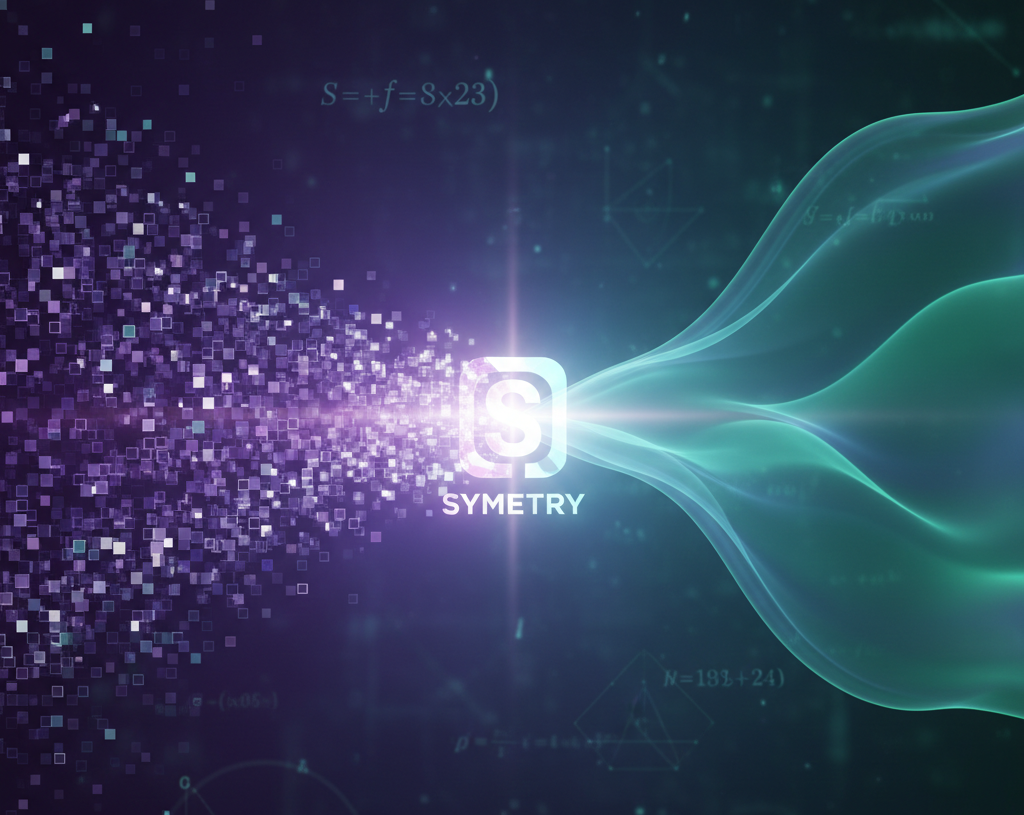
In addition, the authors propose a precise definition of the non-symmetric Askey–Wilson function in the rank‑one case, based on the Cherednik–Stokman kernel, and show that this function admits an explicit decomposition into a symmetric part and an anti-symmetric part. This decomposition allows for a clear description of its spectral properties and its behaviour under DAHA symmetries. Think of the non‑symmetric AW function like an image decomposed into two complementary color layers: warm tones (symmetric layer) and cool tones (anti‑symmetric layer). Each layer is meaningful on its own, but together they render the full picture with contrast and direction. This is exactly what the decomposition achieves: it reveals the internal structure that only becomes visible once you’ve changed scale from polynomials to functions.

Overall, the work combines techniques from algebra, analysis, and the theory of special functions, offering a unified perspective on how algebraic symmetries are reflected in concrete transformations of functions.
A wider landscape for special functions
The results of this article open several promising research directions. On the one hand, they clarify the role of DAHA automorphisms as bridges between different types of special functions, suggesting that analogous transformations may exist in higher rank or for other types of Hecke algebras.
On the other hand, the systematic study of non-symmetric Askey–Wilson functions reinforces their importance as fundamental objects, with potential applications in non-commutative harmonic analysis, representation theory, and models of mathematical physics related to quantum symmetries.
Finally, this work contributes to a deeper understanding of the q-Askey scheme and its internal symmetries, representing an important step towards a more global theory connecting orthogonal polynomials, Hecke algebras, and algebraic geometry.
Symmetry here acts like a change of scale: it asks us to move from the discrete world of polynomials to the continuous world of functions.
By shifting the focus to Askey–Wilson functions, this work shows where the natural language of DAHA symmetries truly lives.
From this unified viewpoint, new paths emerge toward deeper structures, richer connections, and future breakthroughs across mathematics and mathematical physics.

|
|
CRM CommNatalia Vallina
|
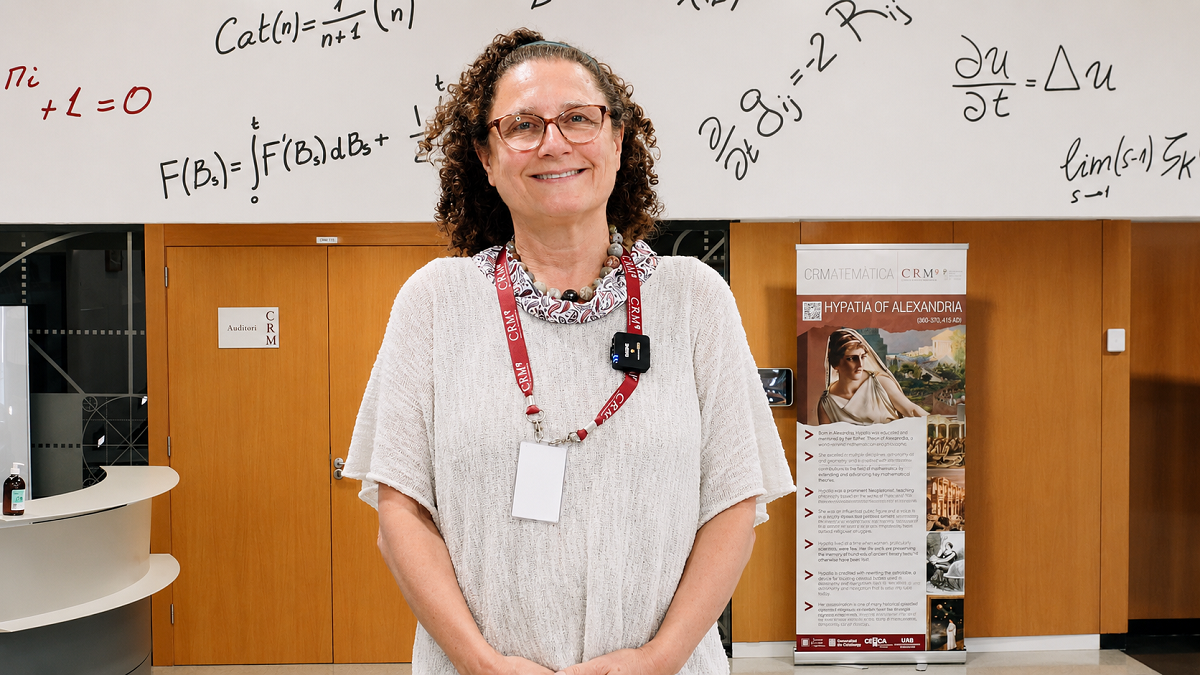
Susanna Terracini delivers the CRM Colloquium 2026
Susanna Terracini (Università di Torino) delivered the CRM Colloquium 2026 on 14 July, presenting a rigidity result for Kepler billiards obtained with Stefano Baranzini, Vivina Barutello and Irene De Blasi. She was at the centre as a member of the CRM Scientific...
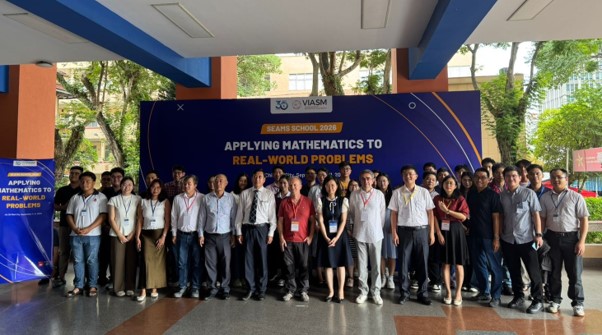
Ho Chi Minh City hosts the first SEAMS School on applying mathematics to real-world problems
More than fifty students from six countries spent a week at the University of Science, VNU-HCM, learning how mathematics gets used outside a mathematics department. CRM researcher Tim Myers co-organised the school and lectured on moving boundary problems. The...

A single ball on a fixed table can compute: Eva Miranda and Isaac Ramos prove that two-dimensional billiards are Turing complete
Eva Miranda (UPC, CRM) and Isaac Ramos (ETH Zürich) show that a point particle bouncing inside a planar table with fixed walls can simulate a universal Turing machine, settling a question Cristopher Moore left open in 1990. The result grew out of a master’s project...
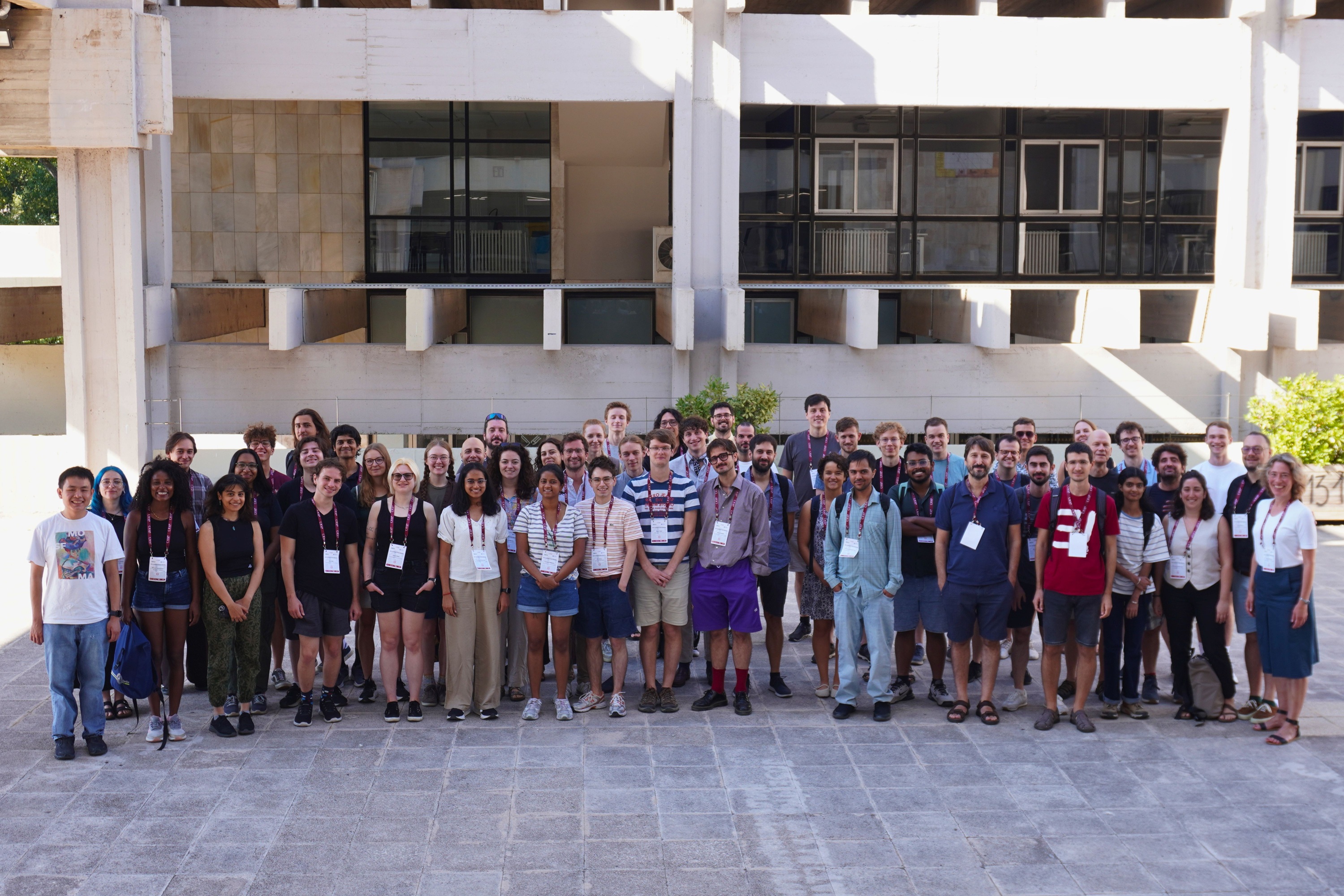
BMS-BGSMath Junior Meeting 2026: Barcelona and Berlin Strengthen Scientific Ties
From 2 to 4 September 2026, the Centre de Recerca Matemàtica (CRM) hosted the BMS-BGSMath Junior Meeting 2026, a three-day event jointly organised by the Berlin Mathematical School (BMS) and the Barcelona Graduate School of Mathematics (BGSMath), with the Centre de...
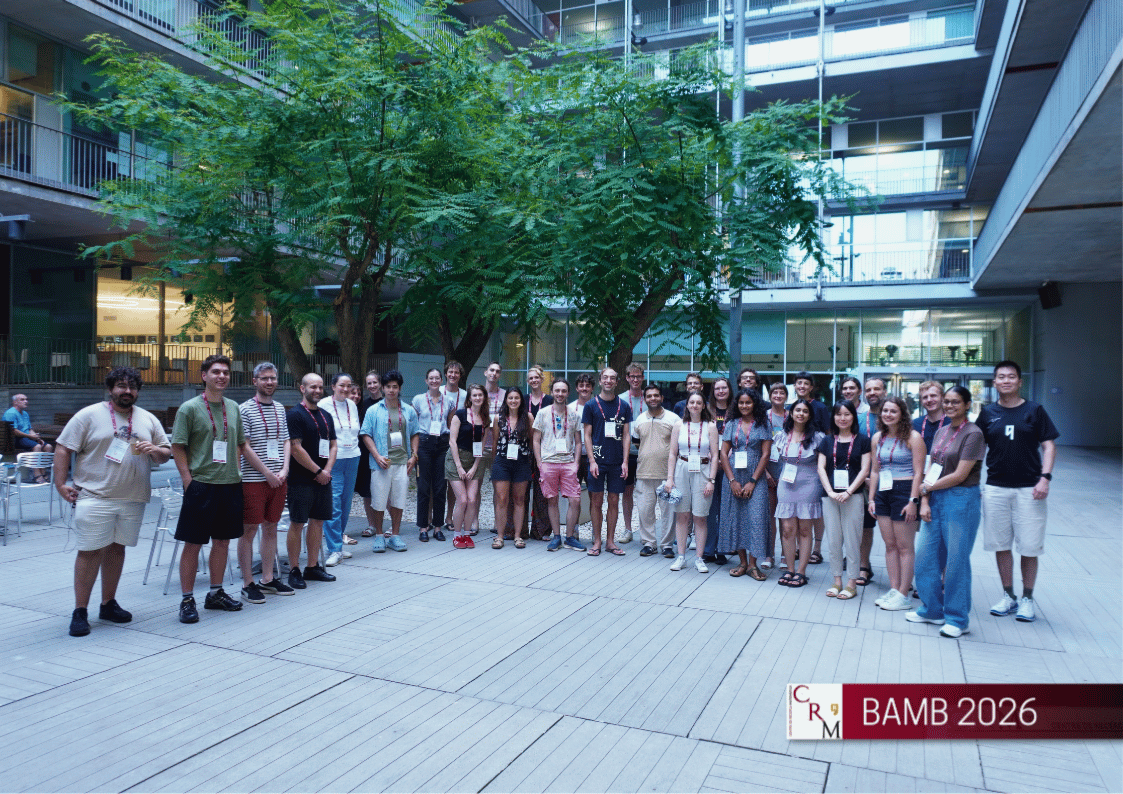
The CRM organises the 2026 Barcelona Summer School for Advanced Modeling of Behavior
The Centre de Recerca Matemàtica held the sixth edition of BAMB!, the Barcelona Summer School for Advanced Modeling of Behavior, from 12 to 23 July 2026 at the Parc de Recerca Biomèdica de Barcelona. Thirty early-career researchers from fourteen countries followed...
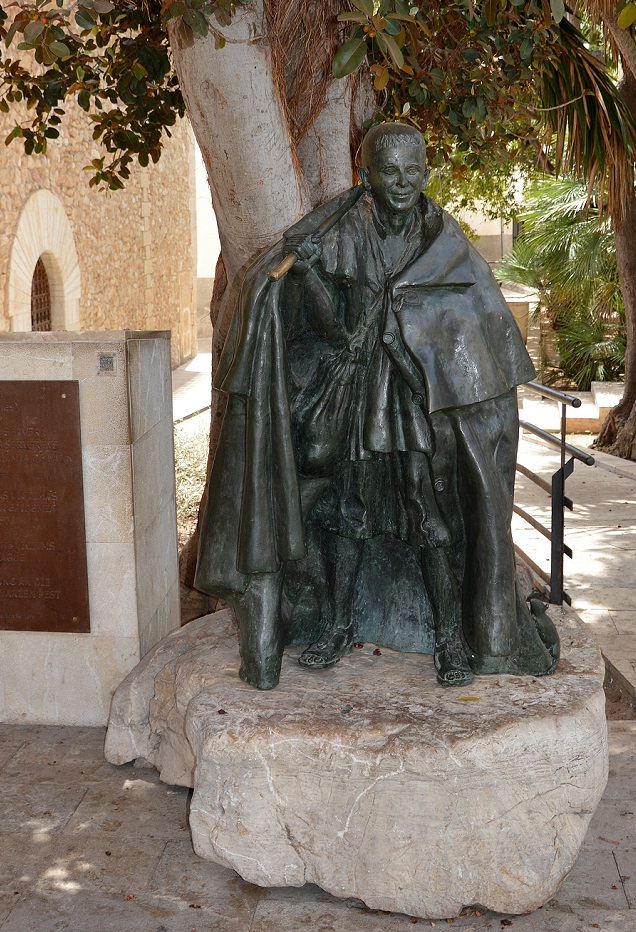
Mallorca’s 1820 plague did not behave like a classic bubonic outbreak, study finds
A study in PNAS by Pere Puig (UAB, CRM) and Joana Maria Pujadas-Mora (UOC, ICREA) reports what happens when the daily health records kept in Son Servera and Capdepera during the 1820 outbreak are analysed with a Bayesian epidemiological model: an unusually short...
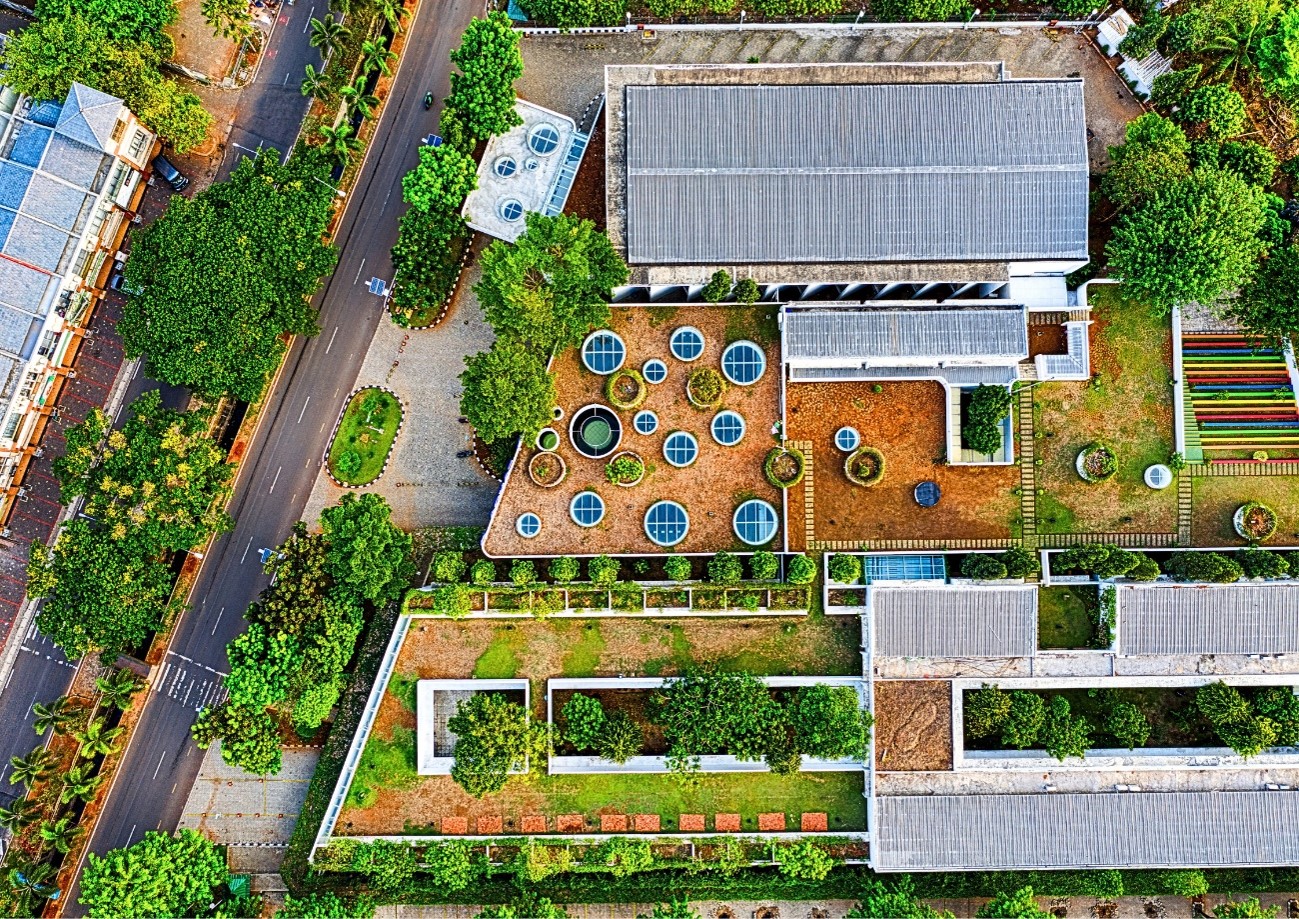
A recent study quantifies the vegetable production potential of Barcelona’s rooftops
A study published in Cities by researchers at ICTA-UAB, with collaboration from the CRM's Knowledge Transfer Unit, estimates that 65 hectares of municipal rooftop could supply 31% of the tomatoes consumed in Barcelona each year.Barcelona has 65 hectares of rooftop...
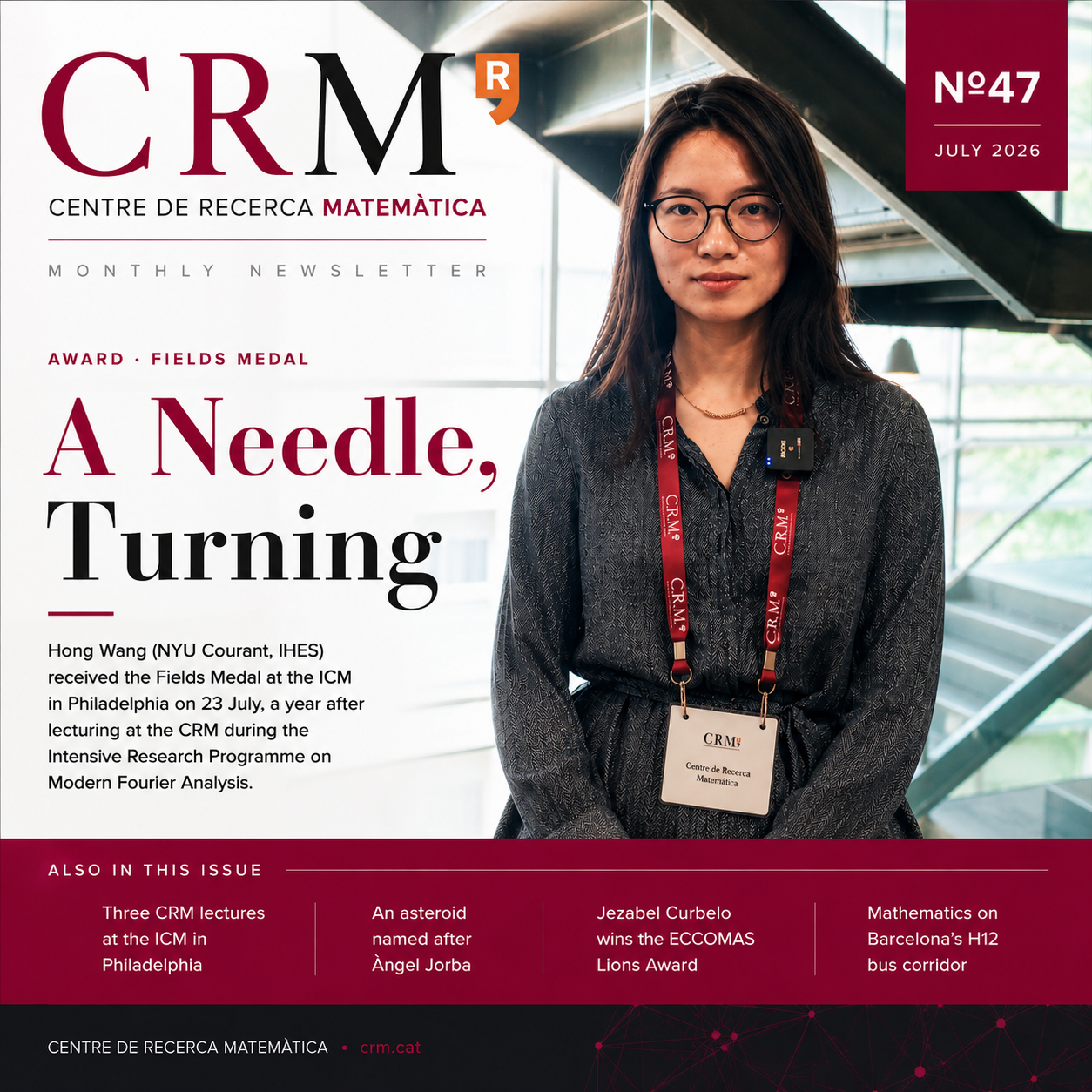
CRM July Newsletter
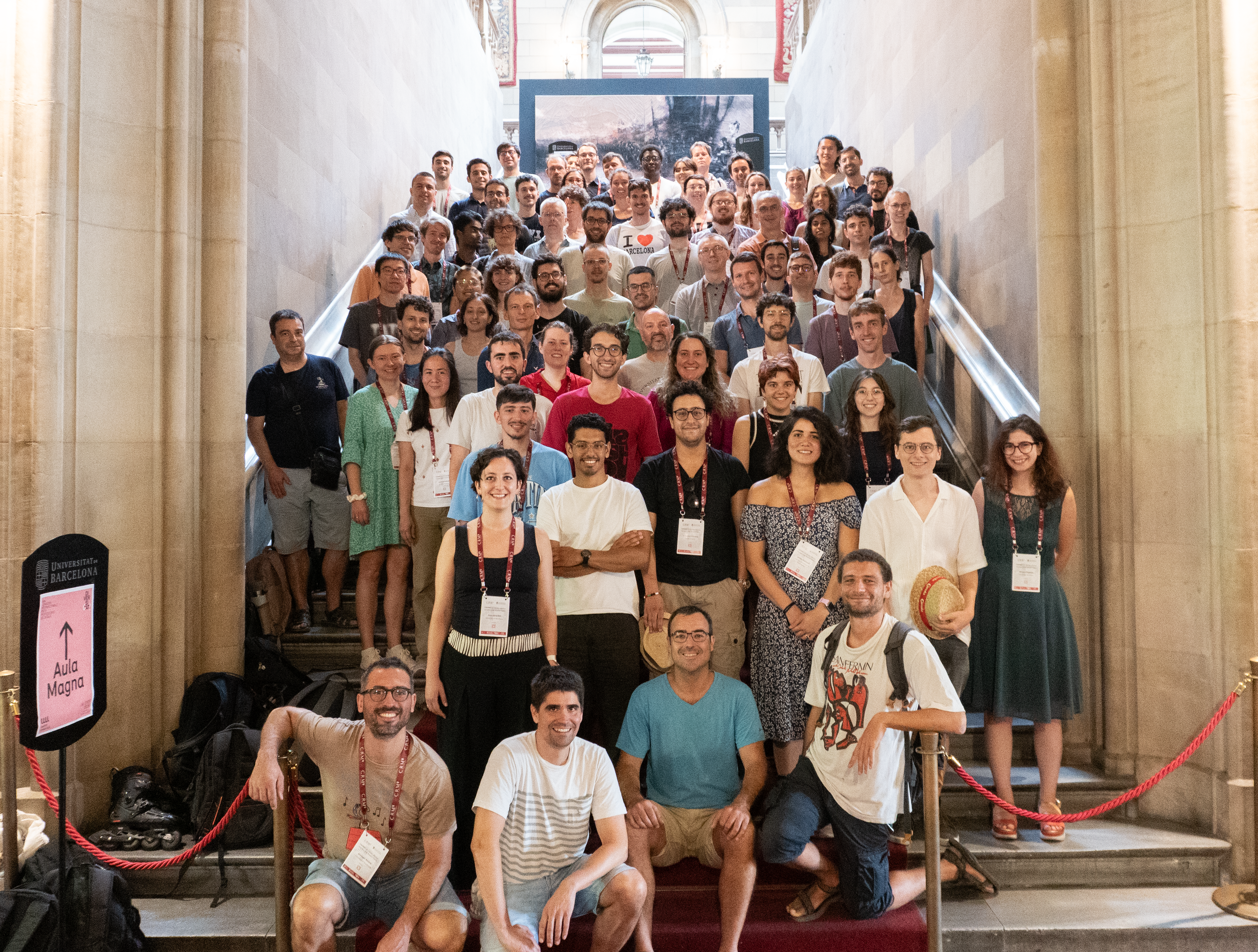
CAVARET 2 brings together 83 researchers on curves and abelian varieties at the Universitat de Barcelona
The second edition of CAVARET, "Curves, Abelian VArieties and RElated Topics", took place at the Faculty of Mathematics and Computer Science of the Universitat de Barcelona from 13 to 17 July 2026. Sixteen invited lectures and ten posters brought together 83...
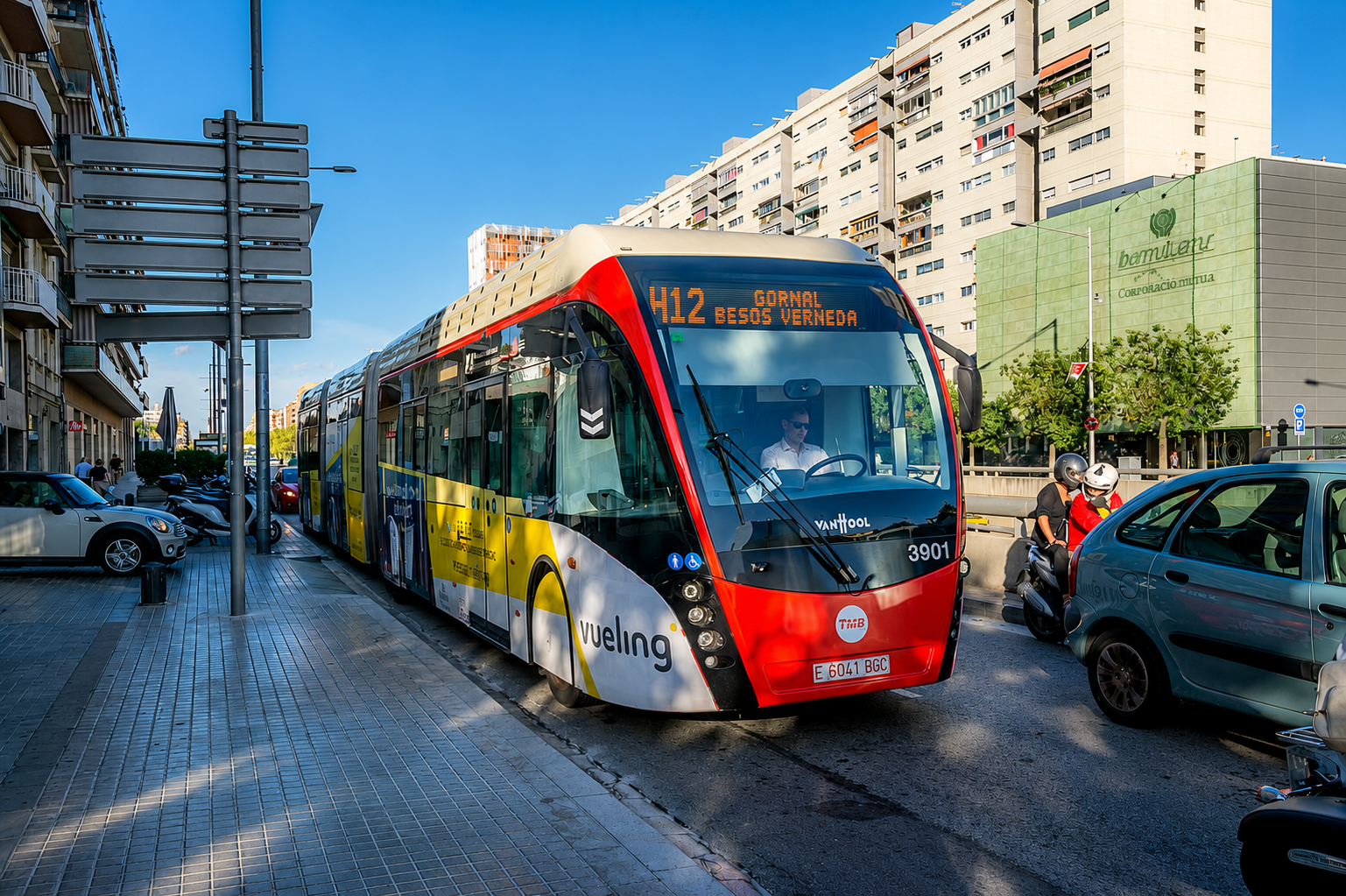
Mathematics on board: CRM’s demand forecasting model enters service on Barcelona’s H12 corridor
The H12 has run along Gran Via for years. What TMB switched on in July is the set of upgrades designed for it inside eBRT2030, a Horizon Europe project testing electric Bus Rapid Transit in six European cities. Behind it, forecasting passenger demand at every stop...
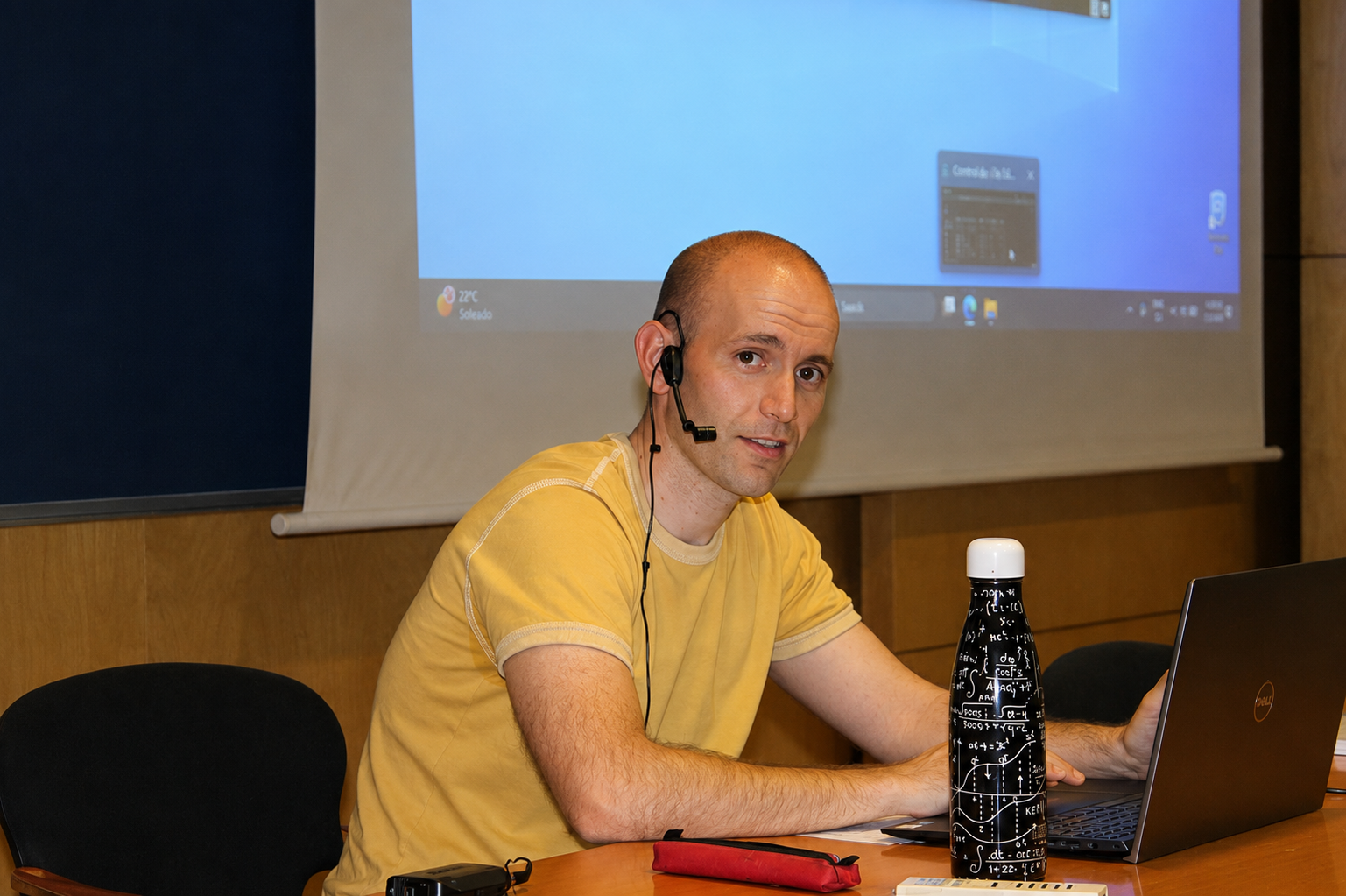
Dídac Gil Rams defends his doctoral thesis on the splitting of separatrices in generalized standard maps
Supervised by Inmaculada Baldomá and Pau Martín, the thesis proves the existence of chaotic dynamics in a broad family of area-preserving maps and combines classical analysis with computer-assisted proof. The defence took place on 3 July 2026 at the FME (UPC).Dídac...
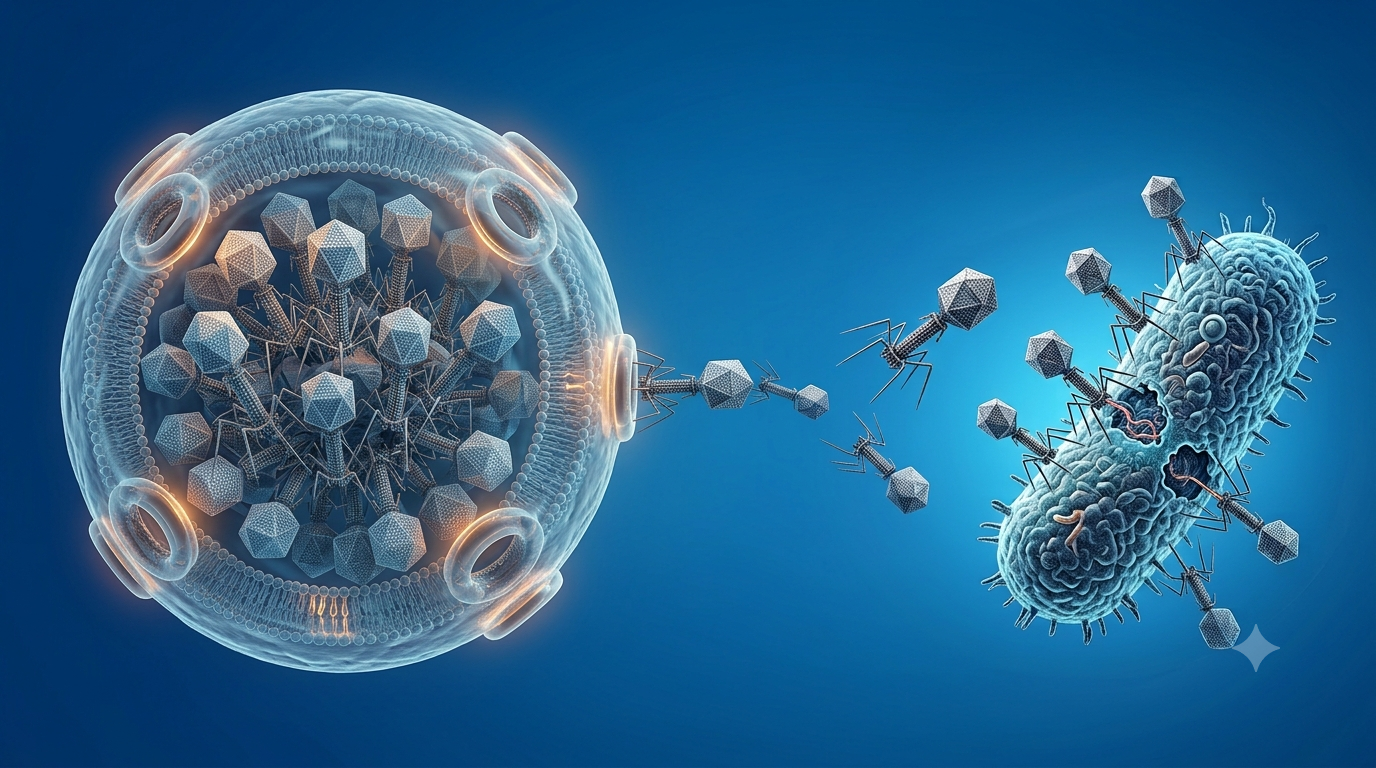
How to Protect Bacteriophages Without Trapping Them? Mathematics to Improve an Alternative to Antibiotics
Bacteriophages — viruses capable of infecting and destroying bacteria — are considered one of the most promising alternatives to tackle the growing problem of antibiotic resistance. However, for these treatments to work, phages must overcome several obstacles before...