

Here I shall discuss a few applications related to the heat flow of harmonic map heat flow.
In particular its global existence, uniqueness and regularity into singular spaces; the regularity of maps near sharp interfaces and the behavior of maps near the first time of self-similar blow-ups. The key tool is the monotonicity formulas of Struwe as well as that of Almgren-Poon type.
A minimizing (1, 2)-cluster is a partition of  into one finite volume chamber and two infinite volume chambers that minimizes the interfacial area among all compactly supported variations preserving the volume of the first chamber. For
  , the “standard lens” is the unique such cluster; its exterior interface is contained in a plane. Starting from
  , we construct minimizing (1, 2)-clusters that are asymptotic to various prescribed area-minimizing hypercones. This talk is based on joint works with Bronsard, Novack, and Skorobogatova.
Identifying the relationship between the structure of a given rough boundary and the behavior of its elliptic measure has a long history. In the two-phase setting, one typically wishes to deduce geometric information about the boundary from analytic information on the pair of elliptic measures from either side. In the multi-operator setting, the coefficients of the operators from either side may have a discontinuity across the boundary, and thus many of the techniques used in the single-operator setting are not applicable. I will discuss some regularity and structural results, analogous to those in the case of a single operator, which we are able to recover in spite of this. In particular, we will see how to get around the lack of available monotonicity formulas in this setting via improvement of flatness techniques for solutions of a suitable free boundary problem. This is based on joint work with Max Goering, and joint work with Cole Jeznach.
A central theme in modern harmonic analysis and elliptic PDE is the interplay between the analytic properties of boundary value problems and the geometry of the underlying domain. In this talk, I will discuss this principle in the context of the Regularity problem for divergence-form elliptic operators in rough domains.
On the one hand, quantitative geometric assumptions on the boundary, such as uniform rectifiability, imply solvability of the Regularity problem with Sobolev data. On the other hand, solvability itself carries geometric information. I will describe recent results showing that the solvability of the Regularity problem characterizes uniform rectifiability of the boundary, thus establishing an equivalence between analytic and geometric regularity.
I will also discuss a qualitative counterpart of this picture. In this setting, quantitative estimates are replaced by qualitative assumptions, and solvability leads naturally to rectifiability of the boundary. This perspective connects boundary value problems, harmonic measure, and geometric measure theory, and suggests new directions toward free boundary problems where geometry is recovered from analytic information.
REGISTRATION FEE
100€
(Includes coffee breaks and social dinner)
Workshop on Free Boundary Problems
to November 06, 2026
Venue: Centre de Recerca Matemàtica (CRM)
Room: Auditorium
Effective June 15th, 2026, bank transfer payments will no longer be accepted for any CRM activity. All registration fees must be paid by card to complete the registration process.
If your institution requires an invoice for reimbursement or administrative purposes, you can request it during the registration process. Once your registration fee has been paid, please send the proof of payment to comptabilitat@crm.cat. The invoice will be issued after the payment has been received and verified.
DESCRIPTION
This Workshop is part of the Intensive Research Programme on Analysis of Free Boundary Problems
This workshopaims to bring together experts in various fields in Analysis and PDE, especially those working on topics in elliptic and parabolic free boundaries, and geometric measure theory and harmonic analysis in rough domains. In particular, this week will consist of roughly 15-17 hour long research talks, along with shorter blocks planned for students to have a chance to present their work. A strong emphasis will be placed on uniting techniques from those in adjacent research areas in elliptic and parabolic PDE.
INVITED SPEAKERS
Harmonic measure, hausdorff content estimates, and sets of dimension 2.999999
Matthew Badger
University of Connecticut
Abstract
Existence of some orthogonal families of curves in a rectangle
Guy David
Université Paris-Saclay
Abstract
Federico Franceschini
Stanford University
Recent Progress on the Parabolic David-Semmes Conjecture
John Hoffman
Florida State University
Abstract
Fine properties of free boundaries in supercooled Stefan problem
Inwon Kim
University of California – Los Angeles
Abstract
Elliptization of the Gradient Flow / Weighted Energy Dynamics and Applications.
Fang-Hua Lin
Courant Institute of Mathematics
Abstract
Svitlana Mayboroda
ETH Zurich, University of Minnesota, IAS
Analysis vs. Geometry for the Regularity Problem for Elliptic Operators in Rough Domains
Mihalis Mourgoglou
Ikerbasque, EHU
Abstract
Minimizing clusters with prescribed asymptotic geometry
Robin Neumayer
Carnegie Mellon University
Abstract
Multi-operator two-phase elliptic measure: regularity and structure
Anna Skorobogatova
Institute for Theoretical Studies / ETH Zurich
Abstract
Parabolic Theory as a High-Dimensional Limit of Elliptic Theory
Marianna Smit Vega Garcia
Western Washington University
Abstract
Singularly perturbed elliptic systems modeling partial separation and their free boundaries
Susanna Terracini
Università di Torino
Abstract
Quantitative differentiation, Poincarè inequalities and statistical learning theory
Michele Villa
UPV/EHU
Abstract
Slow decay vs. fast decay around minimal cones
Kelei Wang
Wuhan University
Abstract
Hui Yu
National University of Singapore
scientific committee
Max Engelstein | University of Minnesota
Mariana Smit Vega Garcia | Western Washington University
Zihui Zhao | Johns Hopkins University
ORGANISING committee
Xavier Fernandez-Real | École polytechnique fédérale de Lausanne
Cole Jeznach | Universitat Autònoma de Barcelona
Xavier Ros Oton | ICREA – Universitat de Barcelona – Centre de Recerca Matemàtica
Xavier Tolsa | ICREA – Universitat Autònoma de Barcelona – Centre de Recerca Matemàtica
LIST OF PARTICIPANTS
| Name | Institution |
|---|---|
| Joan Hernández García | Universitat Autònoma de Barcelona |
| Polina Perstneva | University of Geneva |
| Emily Casey | University of Minnesota |
| Xiangqian Meng | Kyoto University |
| Filippo Paiano | University of Pisa |
| Martí Prats Soler | Universitat Autònoma de Barcelona |
| Pablo Hidalgo Palencia | Universitat de Barcelona |
| Mihalis Mourgoglou | Euskal Herriko Unibertsitateko |
| Kelei Wang | Wuhan University |
| Chayma Nssibi | LAMSIN, National Engineering School of Tunis (ENIT), University of Tunis El Manar |
| Susanna Terracini | University of Turin |
| Inwon Kim | University of California |
| Mariana Smit Vega Garcia | Western Washington University |
| Robin Neumayer | Carnegie Mellon University |
| Roberto Colombo | Swiss Federal Institute of Technology in Lausanne |
| Hedong Hou | Swiss Federal Institute of Technology in Zurich |
| Hui Yu | National University of Singapore |
| Joan Domingo Pasarin | Universitat de Barcelona |
| Alejandro Martínez Sánchez | Universitat de Barcelona |
| Federico Franceschini | Stanford University |
| Svitlana Mayboroda | Swiss Federal Institute of Technology in Zurich |
| Alberto Pacati | Swiss Federal Institute of Technology in Zurich |
| Guy David | Université Paris Saclay |
| Xavier Tolsa Domènech | ICREA, Universitat Autònoma de Barcelona, and CRM |
| Terry Wang | Swiss Federal Institute of Technology in Zurich |
| Yousef Alamri | King Abdullah University of Science and Technology |
| Iñigo U. Erneta | Universitat Politècnica de Catalunya |
| Cole Jeznach | Universitat Autònoma de Barcelona |
| Luis Lloret-Sanchez | Universitat Autònoma de Barcelona |
| Lorenzo Ferreri | Swiss Federal Institute of Technology in Zurich |
| Jaume Capdevila Jové | Universitat Autònoma de Barcelona |
| Juan Carlos Cantero | Universitat Autònoma de Barcelona |
| Carmelo Puliatti | Universitat Autònoma de Barcelona |
| Yingying Cai | Universitat Autònoma de Barcelona |
| Laura Prat Baiget | Universitat Autònoma de Barcelona |
| Nuno Carneiro | University of Pisa |
| Marina Fernàndez Vilaseca | Universitat Autònoma de Barcelona |
| Joquim Martin | Universitat Autònoma de Barcelona |
| Àlex Martín | Universitat Autònoma de Barcelona |
| Johannes Hosle | Carnegie Mellon University in Qatar |
| Joan Mateu Bennassar | Universitat Autònoma de Barcelona |
| Joan Orobitg Huguet | Universitat Autònoma de Barcelona |
| Xavier Ros Oton | Universitat de Barcelona |
| Xavier Fernàndez-Real | École Polytechnique Fédérale de Lausanne |
registration
Registration deadline: 19 October 2026
CRM User Account Creation
After creating your CRM user account, you can log in on the activity webpage to complete your registration, or by clicking the button and then selecting ‘Sign in’.
REGISTER
LODGING INFORMATION
ON-CAMPUS AND BELLATERRA
BARCELONA AND OFF-CAMPUS
 |
For inquiries about this event please contact the Scientific Events Coordinator Ms. Núria Hernández at nhernandez@crm.cat
|
CRM Events code of conduct
All activities organized by the CRM are required to comply with the following Code of Conduct.
CRM Code of Conduct
scam warning
We are aware of a number of current scams targeting participants at CRM activities concerning registration or accommodation bookings. If you are approached by a third party (eg travellerpoint.org, Conference Committee, Global Travel Experts or Royal Visit) asking for booking or payment details, please ignore them.
Please remember:
i) CRM never uses third parties to do our administration for events: messages will come directly from CRM staff
ii) CRM will never ask participants for credit card or bank details
iii) If you have any doubt about an email you receive please get in touch

Sustainable Events
We are committed to organising sustainable events that minimise environmental impact and create a positive legacy for the host community. We support organisers in designing events aligned with the UN 2030 Sustainable Development Goals, reducing negative environmental impacts and promoting responsible practices.
All materials provided during our activities are responsibly sourced, including recycled pens and plastic-free badges. We work with responsible suppliers, and our catering partners use fully compostable materials while offering vegetarian and vegan options, with at least one event day being fully vegetarian.
In this talk I will give an overview of various recent results concerning quantitative differentiation of Lipschitz and Sobolev functions in geometric contexts. For example, I will present an extension of Dorronsoro theorem to uniformly rectifiable sets and show that all uniformly rectifiable sets may be covered with a surface supporting a Poincaré inequality. I will then apply this theory to problems in unsupervised and supervised statistical learning. These results come from various joint works with J. Azzam, E. Caputo, M. Hyde, M. Mourgoglou, R. Schul and I. Violo.
In the Euclidean setting, David and Semmes conjectured that, in the presence of the ADR condition,  boundedness of the Riesz transform implies uniform rectifiability of the underlying measure. We present recent progress on the parabolic analog of this conjecture.
Bernoulli type free boundary problems have a well-developed existence and regularity theory. Much of this, however, is restricted to the case of minimizers of the natural energy (the Alt-Caffarelli functional). I will describe a compactness and regularity theorem that applies to any critical point instead, based on a nonlinear frequency formula and Naber-Valtorta estimates. Then I will explain, via an example involving gravity water waves, how to use this theorem to find min-max type (mountain pass) solutions. This is based on joint work with Georg Weiss.
This is joint work with Polina Perstneva, to be written (so, not yet secured but probably interesting anyway). The initial question concerned the construction, on domains of the plane bounded by general snowflakes, of elliptic operators with a given harmonic measure on the boundary. For this we like to construct the level sets of the Green function first, and the desired ellipticity of the constructed operator translates into a long distance regularity of the distance between the orthogonal gradient lines. A regulation tool is needed, which translates into the following control problem on the square. Can we find two mutually orthogonal sets of curves in the unit square (green and red), so that the green curves connect points  on the left to to
  on the right, and the red ones go from
  (f(x), 1) [/latex] on the top, where
  is any given small enough compact perturbation of the identity in
 ![[0, 1]](https://www.crm.cat/wp-content/ql-cache/quicklatex.com-caffaae885a1287e3dfc31bfb1cd0694_l3.png "Rendered by QuickLaTeX.com") ?
?
The dimension  of harmonic measure in
  is the maximal minimum Hausdorff dimension of a subset of a boundary of a bounded domain through which the trace of Brownian motion first exits the domain almost surely. From theorems of Makarov, Jones, Wolff, and Bourgain in the 1980s, it is known that
  and
and  for all
  .
.
In the early 1990s, Bishop conjectured that  and
and 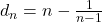 for all , but the conjecture is wide open. I will discuss ideas behind the state-of-the-art upper bounds
  and
and 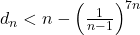 for all , including building covers with disjoint cubes in general position and a flexible scheme to approximate polar integration against Ahlfors regular measures.
I will also present several challenges on the dimension of harmonic measure that could plausibly be solved before Bishop’s conjecture. This talk is based on joint work with Michael Albert (University of Connecticut, Okinawa Institute of Science and Technology) and Alyssa Genschaw (Milwaukee School of Engineering).
We investigate the asymptotic behavior, as  , of solutions to competition-diffusion systems of type

where  satisfy the partial segregation condition
 in
in  .
.
For  fixed, a solution can be obtained as a minimizer of the functional

on the set of functions in  with fixed traces on
  .
.
We prove a priori and uniform (in  ) Hölder bounds. In the limit, we are led to minimize the energy

over all partially segregated states
 in
in
satisfying the given partially segregated boundary conditions above. We prove regularity of the free boundary up to a low-dimensional singular set.
Since elliptic PDE theory can be seen as a steady-state version of parabolic PDE theory, if a parabolic estimate holds, then by eliminating the time parameter, one can obtain an underlying elliptic statement. Producing a parabolic statement from an elliptic statement, on the other hand, is not as straightforward. In this talk, we will discuss how a high-dimensional limiting technique can be used to prove theorems about solutions to the fractional heat equation from their elliptic counterparts. This is a joint work with Blair Davey.
In the study of the Bernstein problem, Bombieri-De Giorgi-Giusti established the existence of minimal foliations around the Simons cone. Later, Hardt-Simon identified a remarkable condition, the strictly minimizing condition, which determines the decay rate of smooth minimal hypersurfaces in this foliation as they approach the minimal cone, i.e. if it is a slow decay or fast decay. This condition proves highly useful in numerous other problems, such as the construction of entire minimal graphs. In this talk, I will first provide a review of this slow decay vs. fast decay issue, and then discuss similar phenomena in several other problems, including the Allen-Cahn equation and the Alt-Caffarelli one-phase free boundary problem.