

HYPATIA
2026
2024
HYPATIA
2026
2024
HYPATIA
2026
2024
HYPATIA
2026
2024
HYPATIA
2026
2024
HYPATIA
2026
2024
HYPATIA
2026
2024
HYPATIA
2026
2024
Hypatia Graduate Summer School 2026
to June 11, 2026
Venues:
Hypatia School: Auditorium - Centre de Recerca Matemàtica (CRM) & Sala Nicolau Olwer - Institut d'Estudis Catalans (IEC)
Hypatia Colloquium: Sala Coromines - Institut d'Estudis Catalans (IEC)
Grants for accommodation and registration available.
COLLOQUIUM
REGISTRATION FEE
100 €
(Includes coffee breaks, lunches, and catering services provided during the colloquium at the IEC.)
SCHEDULE
REGISTRATION
Declaration of intent

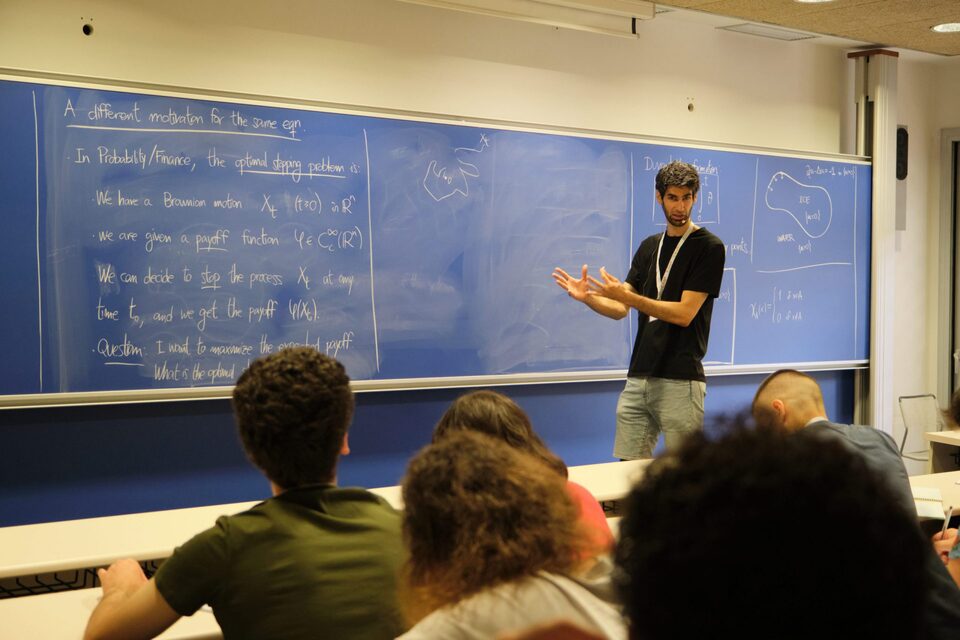
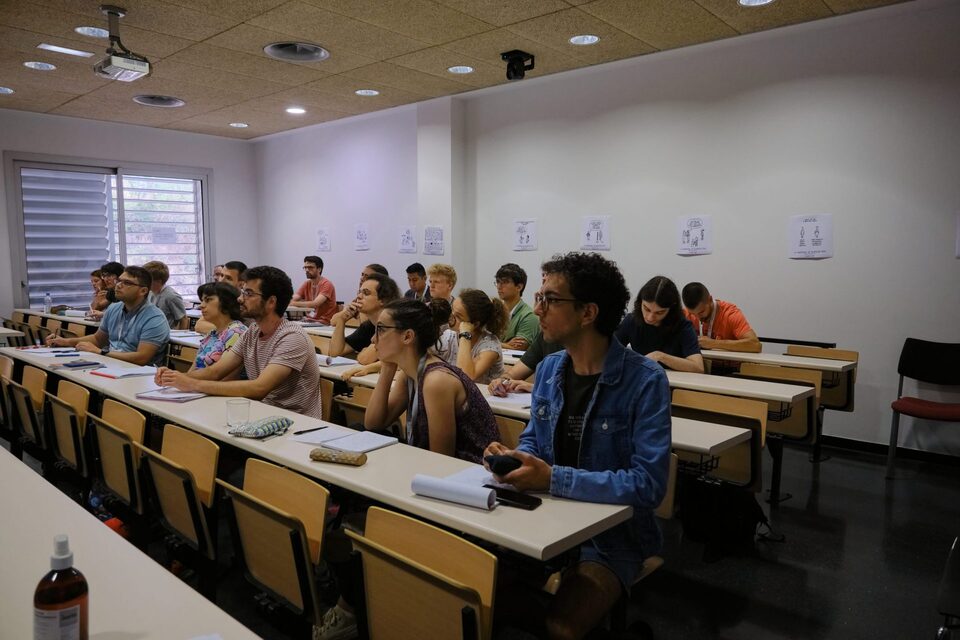
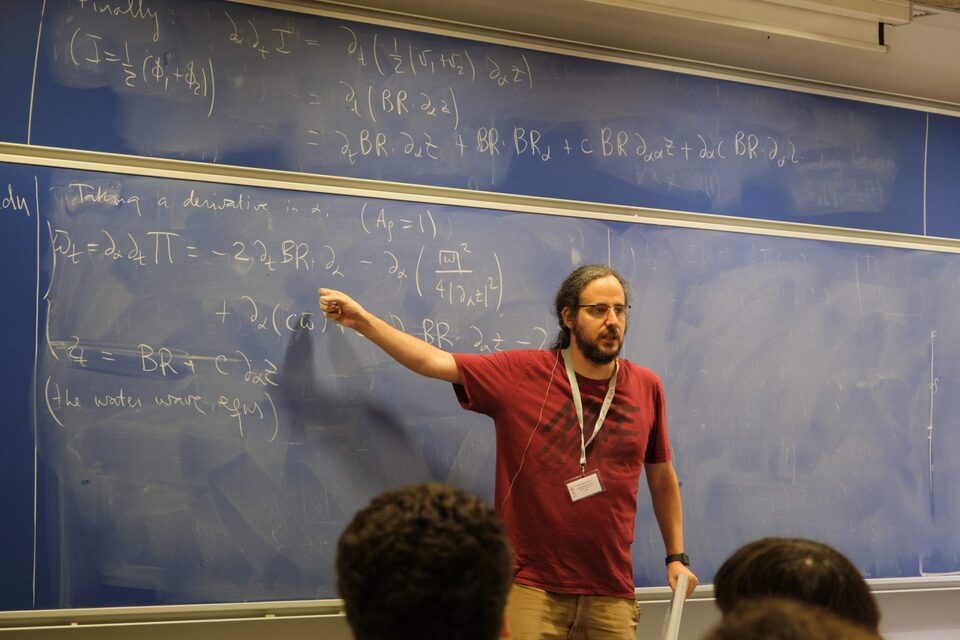
This summer school series aims at training their participants in key strategic problems in mathematics and their applications, with the core idea that theory and applications strengthen each other. The school is focused in training of young researchers whilst opening new fields for senior ones.
The Hypatia Graduate Summer School will consist in two keynote courses on subjects of exceptional promise and scientific importance delivered by highly distinguished speakers in the area plus a high-level colloquium on a complementary subject.
The Hypatia Graduate Summer School will be developed in an informal atmosphere based on discussions, exchange of ideas and critical analysis of results. Moreover, to honour its namesake, it is committed to work under a friendly gender perspective that highlights the role of women in mathematics and encourages and helps the participation and promotion of young female researchers at a professional level.
Previous editions
Hypatia 2025
Hypatia 2024
Hypatia 2023
Hypatia 2022
lecturers
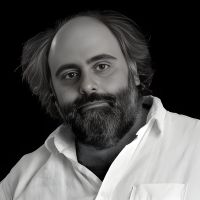
Tomás Alarcón
ICREA - Centre de Recerca Matemàtica
With a PhD in Theoretical Physics from the University of Barcelona in 2000 he obtained postdoc positions at the University of Oxford, UK (2001-2003), University College London, UK (2003-2006), and Imperial College London, UK (2006-2009). After a brief group leader position at BCAM, Bilbao, he moved to the CRM where he leads the Cancer Modelling Group. His work aims to develop computational and mathematical methods that allow us to understand biological behaviour as an emergent property of complex, multiscale phenomena, particularly in the context of cancer and ageism.

Giulia Laura Celora
University of Oxford
Hooke Research Fellow in Applied Mathematics at the Mathematical Institute of the University of Oxford. Previously she was an EPSRC Doctoral Prize Fellow at the Department of Mathematics at University College London. Her research is in the field of mathematical biology and aims to develop mechanistic mathematical models to understand the emergent dynamics of heterogeneous collectives in biological systems. This is relevant to several applications: from the organisation of biomolecules within the intracellular space, collective cell migration, and tumour growth. Giulia received her PhD in Applied Mathematics from the University of Oxford in 2023 and has been awarded L’Oréal-UNESCO for Women in Science Rising Talent 2024.

Gissell Estrada
Universitat Politècnica de Catalunya - Centre de Recerca Matemàtica
Tenure-track lecturer in Mathematics at the Universitat Politècnica de Catalunya and a researcher at the Centre de Recerca Matemàtica. Her work focuses on the interaction between partial differential equations, kinetic theory, and interdisciplinary applications in biology, network theory, and robotics. She holds a PhD in Applied Mathematics from the Maxwell Institute Graduate School in Analysis and its Applications at the University of Edinburgh, and has conducted research at Sorbonne University, the Basque Center for Applied Mathematics, and the University of Oxford. She was awarded with a BBVA Beca Leonardo 2025 for the project Collective migration across scales: From PDEs to physical swarms.
COURSES
COURSE 1 | Partial Differential Equations for Biology and Beyond
Lecturers: Tomás Alarcón (ICREA – Centre de Recerca Matemàtica) & Gissell Estrada (Universitat Politècnica de Catalunya – Centre de Recerca Matemàtica)
Abstract:
This course introduces key PDE frameworks used to model biological systems across scales. We will explore how mean-field limits, transport and kinetic equations, chemotactic models, and structured PDEs arise naturally from simple interaction rules and biological mechanisms. The focus will be on core ideas, illustrative examples, and connections between modelling, analysis, and emergent behaviour, highlighting the versatility of PDEs in modern mathematical biology.
COURSE 2 | Exploring Self-Organisation in Biology through Mathematical Modelling
Lecturers: Giulia Laura Celora (University of Oxford)
Abstract:
Multicellularity relies on the robust coordination of interacting units across space and time. From proteins within a single cell to ensembles of cells within tissues, biological systems must maintain order for life to function. Since Turing’s seminal work on morphogenetic pattern formation, mathematical modelling has been central to uncovering how complex structures and behaviours emerge from underlying biophysical and biochemical interactions.
This course introduces participants to the field of biological complex systems, integrating concepts from dynamical systems, nonlinear analysis of partial differential equations, physics, and cell biology. We will explore a range of modelling approaches used to study the macroscopic dynamics of biological self-organisation, with applications spanning embryonic development, tissue morphodynamics, and cancer progression. By the end of the course, students will gain both an overview of current methodologies and an appreciation of the complexity and challenges that biological systems pose for quantitative modelling.
HYPATIA COLLOQUIUM
June 9th, 2026
16:30
TBP
ABSTRACT
TBP
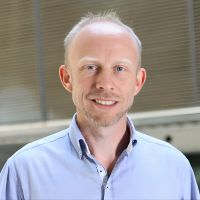
James Sharpe
ICREA - European Molecular Biology Laboratory
James Sharpe is the Head of EMBL Barcelona (Tissue Biology and Disease Modelling Unit), a Senior Group Leader, and an ICREA Research Professor. He is a developmental biologist who specializes in Systems Biology, focusing on understanding complex processes like organogenesis (particularly mammalian limb development) through multi-scale computer simulations. His highly interdisciplinary approach combines biology, physics, and computer science, and he is a pioneer in the 3D imaging technique known as Optical Projection Tomography (OPT). Prior to taking his role at EMBL in 2017, he served as a Senior Group Leader and Coordinator of the Systems Biology Program at the Centre for Genomic Regulation (CRG) in Barcelona.
*Attending the colloquium (open to everyone) is free, but registration is mandatory by completing the following form by June 4th.
HYPATIA COLLOQUIUM FORM FOR ATTENDANCE
*Registration for the colloquium is not required for participants of the Hypatia School; they will be automatically added to the attendance list.*
SCHEDULE
Monday June 8th, 2026 | Tuesday June 9th, 2026 | Wednesday June 10th, 2026 | Thursday June 11th, 2026 | |
| ; | CRM | Institut d'Estudis Catalans | CRM | CRM |
9:45 | REGISTRATION | |||
10:00 - 11:00 | Partial Differential Equations for Biology and Beyond Gissell Estrada UPC – CRM | Partial Differential Equations for Biology and Beyond Gissell Estrada UPC – CRM | Partial Differential Equations for Biology and Beyond Gissell Estrada UPC – CRM | Partial Differential Equations for Biology and Beyond Tomás Alarcón ICREA – CRM |
11:00 - 11:30 | COFFEE BREAK | |||
11:30 - 12:30 | Partial Differential Equations for Biology and Beyond Gissell Estrada UPC – CRM | Partial Differential Equations for Biology and Beyond Gissell Estrada UPC – CRM | Partial Differential Equations for Biology and Beyond Gissell Estrada UPC – CRM | Partial Differential Equations for Biology and Beyond Tomás Alarcón ICREA – CRM |
12:30 - 13:30 | Exploring Self-Organisation in Biology through Mathematical Modelling Giulia Laura Celora University of Oxford | Exploring Self-Organisation in Biology through Mathematical Modelling Giulia Laura Celora University of Oxford | Exploring Self-Organisation in Biology through Mathematical Modelling Giulia Laura Celora University of Oxford | |
13:30 - 15:00 | LUNCH | |||
15:00 - 16:00 | Exploring Self-Organisation in Biology through Mathematical Modelling Giulia Laura Celora University of Oxford | Exploring Self-Organisation in Biology through Mathematical Modelling Giulia Laura Celora University of Oxford | Exploring Self-Organisation in Biology through Mathematical Modelling Giulia Laura Celora University of Oxford | |
16:00 - 16:30 | BREAK | |||
16:30 | Film Projection & Discussion | Hypatia Colloquium TBP James Sharpe ICREA – European Molecular Biology Laboratory | Scientific Speed Dates | |
REGISTRATION AND ACCOMMODATION GRANTS
In order to increase the number of young researchers participating in this activity, the CRM offers grants to cover the registration and lodging expenses.
To apply, you must complete the registration process; please go to SIGN IN, choose the General registration option and indicate in the OTHERS section which grant options you wish to apply for; you will be asked to attach your CV. Please click on the Reservation option before finishing the process.
| Application deadline for grants is April 15, 2026 |
| Resolutions will be sent by April 24, 2026 |
*Registration covers participation in all school activities, as well as coffee breaks, lunches, and catering services at the IEC.
registration
Registration deadline 22/05/2026
CRM User Account Creation
After creating your CRM user account, you can log in on the activity webpage to complete your registration, or by clicking the button and then selecting ‘Sign in’.
REGISTER
LIST OF PARTICIPANTS
| Name | Institution |
|---|---|
| Gissell Estrada | Universitat Politècnica de Catalunya |
| Josep Alvarez Montaner | Universitat Politècnica de Catalunya |
| Sorina Madalina Sferle | Universitat Politècnica de València |
| Giulia Laura Celora | University of Oxford |
| Tomas Alarcon | Centre de Recerca Matemàtica |
INVOICE/PAYMENT INFORMATION
IF YOUR INSTITUTION COVERS YOUR REGISTRATION FEE: Please note that, in case your institution is paying for the registration via bank transfer, you will have to indicate your institution details and choose “Transfer” as the payment method at the end of the process.
UPF | UB | UPC | UAB
*If the paying institution is the UPF / UB/ UPC / UAB, after registering, please send an email to comptabilitat@crm.cat with your name and the institution internal reference number that we will need to issue the electronic invoice. Please, send us the Project code covering the registration if needed.
Paying by credit card
IF YOU PAY VIA CREDIT CARD but you need to provide the invoice to your institution to be reimbursed, please note that we will also need you to send an email to comptabilitat@crm.cat providing the internal reference number given by your institution and the code of the Project covering the registration (if necessary).
LODGING INFORMATION
ON-CAMPUS AND BELLATERRA
BARCELONA AND OFF-CAMPUS
acknowledgement
 |
For inquiries about this event please send an email to crmactivitats@crm.cat
|
CRM Events code of conduct
All activities organized by the CRM are required to comply with the following Code of Conduct.
CRM Code of Conduct
scam warning
We are aware of a number of current scams targeting participants at CRM activities concerning registration or accommodation bookings. If you are approached by a third party (eg travellerpoint.org, Conference Committee, Global Travel Experts or Royal Visit) asking for booking or payment details, please ignore them.
Please remember:
i) CRM never uses third parties to do our administration for events: messages will come directly from CRM staff
ii) CRM will never ask participants for credit card or bank details
iii) If you have any doubt about an email you receive please get in touch

Sustainable Events
We are committed to organising sustainable events that minimise environmental impact and create a positive legacy for the host community. We support organisers in designing events aligned with the UN 2030 Sustainable Development Goals, reducing negative environmental impacts and promoting responsible practices.
All materials provided during our activities are responsibly sourced, including recycled pens and plastic-free badges. We work with responsible suppliers, and our catering partners use fully compostable materials while offering vegetarian and vegan options, with at least one event day being fully vegetarian.